Does Travel Make You Smarter?

A delightful piece by Jonah Lehrer in the San Francisco Panorama on the cognitive benefits of travel. He argues that travel is not just about pleasure. It’s about stimulating your mind in a way that enhances creativity. It doesn’t matter where you go or what you do — it’s the physical act of movement and the newness of anything new that generates new thoughts.

In fact, several new science papers suggest that getting away–and it doesn’t even matter where you’re going–is an essential habit of effective thinking. It’s not about vacation, or relaxation, or sipping daiquiris on an unspoiled tropical beach: it’s about the tedious act itself, putting some miles between home and wherever you happen to spend the night….

The larger lesson, though, is that our thoughts are shackled by the familiar. The brain is a neural tangle of near infinite possibility, which means that it spends a lot of time and energy choosing what not to notice. As a result, creativity is traded away for efficiency; we think in literal prose, not symbolist poetry. A bit of distance, however, helps loosen the chains of cognition, making it easier to see something new in the old; the mundane is grasped from a slightly more abstract perspective….

According to the researchers, the experience of another culture endows us with a valuable open-mindedness, making it easier to realize that a single thing can have multiple meanings. Consider the act of leaving food on the plate: in China, this is often seen as acompliment, a signal that the host has provided enough to eat. But in America the same act is a subtle insult, an indication that the food wasn’t good enough to finish.

Such cultural contrasts mean that seasoned travelers are alive to ambiguity, more willing to realize that there are different (and equally valid) ways of interpreting the world. This, in turn, allows them to expand the circumference of their “cognitive inputs,” as they refuse to settle for their first answers and initialguesses….

So let’s not pretend that travel is always fun, or that we endure the jet lag for pleasure. We don’t spend ten hours lost in the Louvre because we like it, and the view from the top of Machu Picchu probably doesn’t make up for the hassle of lost luggage. (More often than not, I need a vacation after my vacation.) We travel because we need to, because distance and difference are the secret tonic of creativity. When we get home, home is still the same. But something in our mind has been changed, and that changes everything.

###

Here is the State Department’s commentary on the difficulty of learning various foreign languages for native English speakers. Ross Douthat on Avatar’s virtual appeal. (I loved the movie btw.) Cal Newport on what chess grandmasters can teach us about building a remarkable life. Best of Craigslist: sex duel with the neighbors.

Impressions and Lessons from Cyprus

Cyprus-harbour-lg

I spent the last two weeks in North and South Cyprus. It is a beautiful country! I had the opportunity to meet many businesspeople, government officials, journalists, and students. Here's what I learned:

1. A Divided Country. The first thing to say about Cyprus, both because it's the reality and because the locals talk about it constantly, is the political situation. It is a divided country: Turkish Cypriots in the north, Greek Cypriots in the south. A U.N.-controlled "green line" divides the two sides. Like any disputed territory, each side has a different interpretation of history. This I.H.T. op/ed from last week does a good job at briefly describing the two historical narratives.

2. Will There Be Re-Unification? In 2004 citizens of both sides voted on a referendum on the Annan Plan which would have re-unified the country. The north (Turkish) voted yes and the south (Greek) voted no. Why did the Greek Cypriots vote against? Wikipedia offers several reasons. My impression is that there was in general a distrust that the north would fulfill its obligations in the plan and specifically that Turkish troops would ever leave. But the bottom line was economic self-interest: Why absorb a poorer per-capita neighbor? Why would you want your tax dollars to prop up a people who speak a different language and whose history on the island you resent?

Cyprus joined the EU in 2004. This creates even less incentive for the Greek-Cypriots. Had re-unification been a condition of EU membership, the island would have found a way, I think. Cyprus got into the EU as a divided country because Greece threatened to veto the Baltic countries' membership unless Cyprus gained admission. An obvious weakness of the EU is every member country wields veto power over new applicants.

3. Victimhood Narratives. I was impressed with the businesspeople and students I met in North Cyprus. There is so much to say in praise of their resilience. But I worry about one thing: self-pity, no matter how justified, is an unproductive endeavor. And the victimhood narrative seems to run deep in the North Cyprus psyche.

If you see yourself as a victim, by definition there must be a victimizer. For many Turkish-Cypriots, it is the Greek-Cypriots and the international community which recognizes the South. Victims also usually have saviors or protectors. This is Turkey. Thus emerges an easy formula for both excusing and explaining the past (the victimizer) and excusing and blaming failures of the future (the would-be savior). Missing from the equation is a sense of personal responsibility for the present and a spirit of self-determination to create a better future.

4. Leviathan and Santa Claus. ~ 50% of the people in North Cyprus work for the government. The government then, is both Santa Claus and Satan. When good things happen, thank the government. When bad things happen, blame the government. Individuals depend too much on the government. The government in turn depends on Turkey. We need a stronger and more active private sector. We need more entrepreneurs.

5. "We" vs. "I." Victimhood narratives and a bloated state chip away at individuality. If I were facilitating conversations in North Cyprus, I would prohibit anyone, on the topic of politics and national improvement, from starting a sentence with "We." Sweeping diagnoses of society at large fix nothing and distract attention from the one thing an individual can control: his or her own actions and beliefs. In the language of the collective we can forget that a "society" is comprised of individuals, and "society" only changes when each individual first changes himself. "We" proclamations in politics make for stirring rhetoric, but can stymie individual change. The unity sought by collectivist language, absent a foundation of independent individual minds, is rather brittle. Think Gandhi: Be the change you want to see in the world.

6. Should a Congressman Represent America or His District? It is in the U.S. national interest for Cyprus to be a unified country, not because of Cyprus per se (although a more stable country and larger economy benefits all countries, in the non-zero sum game of economic growth), but because a unified Cyprus is helpful for Turkey's admission to the E.U., and the U.S. wants Turkey in the E.U. Turkey is, after all, a majority Muslim country of 74 million with a secular, democratic government that stands at the crossroads of Europe and the Middle East.

Congresspeople don't necessarily hear this story, though. There are about three million Greek-Americans in the U.S. and they comprise a formidable lobby. They oppose unification and regard the Turkish presence in Cyprus as an illegal occupation. This muddies U.S. foreign policy and raises a question about democracy: Should a congressman put the desires and needs of the country ahead of the desires and needs of his particular district? If they conflict, should the national interest trump those of the district whose voters elected you?

7. The Physical and Psychological. It's easier to be a small island, economically speaking, in a globalized world: air travel is easy and cheap, and technology sends bits and bytes over the air regardless of whether it's land or sea below. But I still believe psychological boundaries erect when freedom of movement on your own two feet is limited. The American west worked so well an an idea because it lay physically far away. When the frontier opened, it was possible to get in your car in the east and drive for hours and hours into desert and red clay and canyons and forest. The west lured easterners who wanted to re-invent themselves. The new physical geography sparked new identities and modes of thinking. A small island cannot offer this as easily.

8. Good Food, Good Weather, Good People. There's so much pleasantness on the island. A stroll down Lidra street in Nicosia feels like the Pearl Street Mall in Boulder, except more hip. The October weather I experienced was extraordinary. It's too hot in the summer, but fall and winter delight. The local food is delicious, if Mediterranean / middle eastern cuisine is your thing. For spicy girliemen like myself, the mildness of the cuisine meant I faced none of the "will this food burn my mouth?" anxiety that I faced in China in August. Don't forget baklava for dessert. Cypriot people are hospitable, friendly, interested.

9. Tourist Suggestions. 50% of tourists to Cyprus are Brits. It's a hot spot in Europe. I've never been to Turkey or Greece, but I've heard more enchanting stories about Turkey than Greece; so, if you wanted to stick to a single currency and language, a terrific itinerary would be a two week trip to Turkey and Northern Cyprus. In Cyprus, spend most of your time lounging around the harbor in Kyrenia and sitting on the stunning beaches. Devote a day or two to Nicosia, the last divided capital in the world, and soak up the history and observe the U.N. peacekeepers. Eat kebabs, drink Turkish yogurt, and if ancient history is your thing, marvel at relics of a 9,000 year old place.

10. Students Thinking Differently. I had the opportunity to address over 1,000 people on the island, and I have been touched by some of the emails and relationships I have struck up. It is inspiring to see people there thinking big things.

(The views above are mine, expressed as a private citizen, and do not necessarily represent those of the U.S. government.)

###

On-the-ground lessons and impressions from:

My travel blog has over 250 on-the-ground dispatches from 25 countries.

Why I Travel

I travel because traveling makes me less afraid of the world. Drop me anywhere in the world, and I’ll survive. (Cue Destiny’s Child, now.) I may not speak the language or know another soul, but I’ll survive. This drop-me-anywhere confidence confers meaningful psychic comfort.

I travel because it makes me less racist. Racism is something we have to un-learn.

I travel because it introduces randomness of the most intense degree.

I travel because I enjoy the cultural exchange. Sharing the best of American culture (peanut butter, hamburgers, individualism, and entrepreneurship) while appreciating the non-obvious intricacies of other milieus, such as pandas in China, drug dealers in Colombia, and beer in Czech Republic.

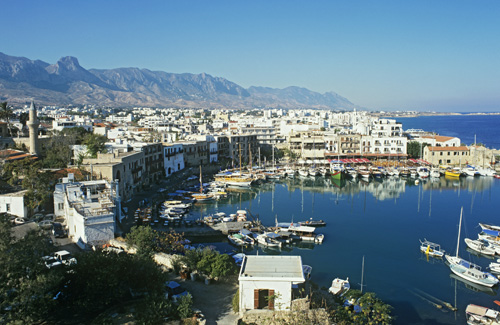
I travel because travel enriches my internal mental stream. I think more original thoughts when I’m traveling, I think more critically about where I am, what I’m doing. My memory comes alive in interesting ways. In Beijing the other day I stared out at a huge lake and mountains and the scene reminded me of standing at a cliff on the Kenai Peninsula in Alaska. I couldn’t quite recall the Alaskan memory, but the connection was felt, and a tremendous stream of thoughts followed. Alain de Bottom: “Journeys are the midwives of thought. Few places are more conducive to internal conversations than a moving plane, ship or train. There is an almost quaint correlation between what is in front of our eyes and the thoughts we are able to have in our heads: large thoughts requiring large views, news thoughts new places. Instrospective reflections which are liable to stall are helped along by the flow of the landscape.”

I travel to force myself to live in the real world as opposed to in head-land. Familiar territory dulls my antenna to the world. When I go to my gym in San Francisco, I am unobservant. I’ve done the walk so many times, down the same street so many times, that I mostly stare at the sidewalk and live within myself. When I’m in a new place I have to pay attention to the street signs, and thus to everything else.

I travel abroad to remember why I love my country. I travel within my country to remember that while founded on perfect ideals it remains an imperfect place.

I travel to be anonymous. Abroad, I am not “Ben.” In China I am a foreign devil. In Latin America I am a gringo. In Europe I am, apparently, just another tall blond German. In Ukraine I am an unmarried American penis with the power to marry and immigrate my spouse. My individuality is subsumed by a group label and the associated stereotypes, and that is, in small doses, oddly liberating.

I travel not because it makes me happy in the moment — in fact, many moments are uncomfortable and stressful as they’re experienced — but because it makes me happy afterwards. I’m happy when recalling memories, embellishing and sharing stories, and reading articles in the newspaper and being able to say to myself, “I’ve been there.” Buying new experiences makes you happy; buying more things generally does not. (Why oh why do wealthy older people keep buying things instead of experiences?)

I travel so I don’t regret not traveling when I’m older. And this is one of the top regrets of well-to-do professionals over 50.

###

Here are all my posts on travel. Other random links: against Adderall, Justine Musk comments on “voice” in writing, Philip Tetlock reviews the latest crop of political-forecasting books, how to tell if you’re a douchebag, parsing the few differences between school and prison.

Lessons and Impressions from China

Chinapostmainimg

It's said that after spending a week in China, you can write a whole book about the country. After spending a month in China, you can write a really nice magazine article about it. After a few months, a blog post. And after a year, you can't write anything, because you discover how little you actually know.

I've spent the last three weeks in Beijing, which brings total time spent in China to five weeks, which means I better crank out a blog post lest I spend too much more time there and get rendered speechless by the country's complexity and contradictions.

Here are some of my high level impressions and lessons from this most recent trip which included two weeks of lectures, seminars, and organized conversations with various Chinese students, professors, and leaders.

1. The moral consequences of economic growth. The main story about modern China should be its economic growth and immense reduction of poverty. According to Kishore Mahbubani, China's modernization has already reduced the number of Chinese living in absolute poverty from 600 million to 200 million. According to Larry Summers, at current growth rates in Asia standards of living may rise 100 fold, 10,000 percent within a human life span. This is one of the great stories of our lifetime. To begin a conversation about China with any other topic misses the point. Freedom is multi-dimensional. Flush toilets and clean water matter more than abstract rights such as a free press. Let us celebrate the emancipation of millions from the chains of poverty.

2. A rising tide lifts all boats. It's easy to say the "US and China have more in common than they have different" and cultural exchanges will emphasize this to no end. It is true. But we ought to go further. We ought to more forcefully emphasize the non-zero sum dynamics of economic growth. I talk about this in my post "Rising Tide Lifts All (Nation-State) Boats." Too many in the West see Chinese economic growth as competitive to Western economic interests. To the contrary, a richer China, with more consumers of expensive products and producers of sophisticated ideas, benefits us.

3. Scale and scope. It is hard to generalize about a country so big. There are many Chinas, not one. Fallows: "The most obvious thing about today's China is how internally varied and contradictory it is, how many opposite things various of its people want, how likely-to-be-false any generalization is."

4. Day-to-day life for me in China was hard. It is too polluted. The censored internet is a pain in the ass (though not to Chinese people — 84% of Chinese internet users think the internet should be controlled by the government). The noise and chaos and dirtiness leave me drained. The wildly overstaffed and undertrained hospitality sector. Cheap and tasty dumplings and noodles aside, the food is too spicy and greasy for my taste, and this individualist does not much like family style serving. Jaw-dropping purchasing power with the dollar does not make up for these annoyances. Yet, I will return to China. I will continue to read articles and books about it. I will do more business in China. Do Americans under 35 have a choice? Does anyone in the world, alive today, who pretends to be up on world events, have a choice? Ignore China at your own peril.

5. What's changed since 2006. Since I was last there, Beijing has seen some remarkable upgrades, thanks mainly to infrastructure put in for the 2008 Olympics. They've added several new subway lines in the last few years, all very modern and efficient. The Beijing airport is a marvel — among the largest and best organized I've been in. There was less honking and more organized traffic flow on the streets. I noticed more people playing basketball, billboards for the first time promoting Kobe Bryant, LeBron James, Baron Davis, and others, and many NBA jerseys worn by locals. Yao Ming was less prominent than his American counterparts. All in all: "As a rule of thumb, Beijing changes as much in three years as Boston does in 30."

6. Media bias. Some Westerners believe that the government-controlled media brainwashes the Chinese people. By the same token, the Chinese students I spoke to are convinced the West has an anti-China bias that may be subtle but is equally misleading. They point to American media's coverage of Tibet in particular. Both sides are right, but both sides exaggerate.

Western media's anti-China bias isn't as strong as China's anti-West bias — China's propaganda is an official government organ, the Western press's bias is rooted in nationalism, "fear of the other," economic illiteracy, etc — but biased it is, and Americans ought to be more skeptical when they read about contentious issues in China in their local newspaper. And China's state-run media is not as outrageous as "state-run propaganda" would lead you to think. I watched an English program on CCTV once and it was surprisingly critical of the government and spoke frankly about poverty and minority unrest in the west. The weekly magazine put in the seatpocket of the train to the airport, in the English language pages, leveled various criticisms at the government. One article said that "there was little respect for rule of law" by businesses in China. Another mentioned government corruption. To be sure, the news bias in strongest probably in what it does not report — sins of omission more than sins of commission.

7. Tibet, Taiwan, Africa. These are three issues of international controversy. I am not well informed on any of them. Chinese people insist, with some defensiveness, that Tibet and Taiwan are "domestic" issues. (Here's an overview of the intellectual shoddiness of the Free Tibet movement and the popular misunderstanding of what's happening there.) In the case of Africa there's considerable more agreement from Chinese and foreigners alike that the government, thirsty for oil, should stop selling weapons to Sudan and others, and stop hindering U.N. Security Council moves to send peacekeepers to the region.

8. Chairman Mao. Three years ago, I remember having a conversation with my college aged tour guide at the Forbidden City. After she snapped my picture under the giant Mao portrait at the entrance, I asked her what she thought of the guy. She spoke in glowing terms. I expected a more hushed response from an educated person. This time around, I again encountered Mao enthusiasm from youth and adults alike. The line you'll hear over and over — first popularized by Deng Xiaoping — is that Mao's contributions to China were 70% good, 30% bad. The "good" referring to his keeping the country together during and after the civil war and uniting diverse factions to stand as one China. On the "bad" side, Mao Zedong's devastating economic policies (Great Leap Forward, Cultural Revolution, etc) brought death to ~ 50 million Chinese people ("officially" it's 20 million). This puts Mao slightly ahead of Stalin and Hitler in the battle for "20th century's worst killers." 70/30 seems, then, generous, no?

9. Obsession with foreign image / perception. Just one example of how obsessed China is with its image abroad: at Tsinghua University, one of the most prestigious in the country, the dorms for foreign students have two beds per room, and three two-hour cycles of hot water in the bathrooms. The dorms for Chinese students, by contrast, have four bunk beds to a room and only one or two cycles of hot water a day. I hear the same is true at other universities in the country. Can you imagine if at American universities the foreign students got put up in posh dorms while the American students made do with less? Scandalous. In fact, it's the opposite in the U.S.: foreign students get screwed, most significantly in the financial aid process. (This approach is not unique to China. In North Korea, I'm told the hotels foreigners are put up in are top-notch, while the locals starve and suffer.)

10. Toward a consumption economy. Macro-economists talk most about China moving from a savings / exports / investment driven economy to one fueled more by domestic consumption. The very insightful Michael Pettis, who spoke to us, pointed out that this transition won't be without a lot of short-term hurt and complications.

11. Democracy and liberalism. The Chinese people I spoke to say democracy will come, but China is a big country, with a long history, and things take time. I have a hard time seeing the CCP relinquishing or distributing power anytime soon. In all things China the long run is very long indeed. Chinese leaders have been saying "we're almost ready for democracy" forever — apparently Mao made such references in his speeches. College students are no different from their elders in this long-run attitude, which I assume has been the case since 1989. By the way, it would help if "democracy" got dissociated from "America" — the two are conflated and this does not help the cause. Also, it's important to broaden the understanding of democracy from simply casting votes to a society that has liberal institutions, too. Bottom line, I do not believe China will ultimately prove an exception to the idea that more capitalism brings more openness; with wealth will come political liberalization. It's just a question of when.

12. "China" doesn't equal "China's government." The economist Scott Summer, in his very insightful post on China, says when we hear the name of a country, we often think of the country's government. But there is more to a country than its government. Americans made this point in earnest during the George W. Bush era. It's important to bear this in mind with China. Its government may be communist and oppressive and brutal toward its own people at times. But that's not the whole story. China is more than the CCP. There are many levels of a society. "When intellectuals talk about foreign countries they often use the name of the country to denote the country’s government, without even saying so. I think that can subtly distort one’s judgment," says Summer.

Other random impressions and nuggets:

  • China's per capita GDP is half that of Brazil. It's a poor country. Even if you don't see this poverty in Beijing and Shanghai, there are still little examples to notice. I would attribute certain eating customs, like the practice of using only one plate or bowl for everything (no side plates for different dishes), to not having many plates to begin with and not wanting to wash as many plates (by hand) at the end. There are no paper towels and soap in public bathrooms. Sanitarily problematic, of course, and ironic given the government's hysteria over swine flu, but millions of paper towels are expensive to stock, and probably the way it's been for awhile. My point is that even in rich cities like Beijing and amid the Fifth Avenue-on-Steroids wealth-display near Wangfujing, for example, evidence of the third world abound.
  • Micro-observation: Chinese people say "ahhhh" a lot in conversation to acknowledge the other person speaking. Whereas Americans might say "uh huh, ok, yep, got it, mmm" to signal to the person speaking that they're with 'em, Chinese people more aggressively say, "ahhh" in the middle and at the end of points the other person makes. I compared this impression to Americans who speak Chinese and they confirmed that it's the case.
  • Culturally influenced tics or habits are fascinating. In America — maybe elsewhere, I don't know — a person will express indifference by shrugging, emitting something that sounds like "eh," cock their head slightly in one direction, and make a facial expression that says, "I don't care." Watching an American try to explain this to a Chinese person, and wondering how many other things I say or do that I simply absorbed from the culture (as opposed to being explicitly taught), awesomely reinforced the diversity of human experience.
  • At all of our dinners the beverages of choice were: Coke, Sprite, and hot tea. I don't get this. Do people in China just not drink as much cold water? I know in poor countries where you can't drink the tap water bottled water can be more expensive than beer or soda. Does this explain it? Are there any health consequences? Are there high levels of dehydration in China? Of course, as a recovering waterholic (you're always "recovering," it's a life long affliction), my quest to find drinking water abroad has been the theme of my travels for years, so I'm used to it.
  • KFC in China is like Starbucks in Seattle. They're everywhere. The food is tastier than in America, and just as expensive.
  • Why does food in restaurants come so quickly? Do they cook in advance and re-heat? While Chinese food in China and Chinese food in America are different, quick turnaround on the order is the case in both places.
  • Squat toilets I had to use several times. Horrible. For those who haven't had the pleasure, a squat toilet is a flush-toilet but built into the ground. No seat to sit on. As a sign that "a fish doesn't know it's swimming in water" — of how you don't see strange what's "normal" to you — the Olympics organizers in 2008 installed squat toilets in most of the stadiums. After lots of preemptive complaints from athletes, they ripped them out and installed Western style toilets in time for the competitions. Related note independent of toilets: the streets of Beijing are lined with people squatting to rest on the street. Kind of endearing, actually, that there's a trademark way to sit.

Here are my other posts on China on my travel blog. Here is my "lessons and impressions" post from my trip three years ago. Here are old posts of mine: on China's infrastructure projects, why freedom there is not bimodal, what we can learn from China's driver's ed, here's what Russians and Chinese have in common. Here's the best book I've read on internal political issues in China. Here's the best narrative / memoir I've read about China.

(Thanks to the IMUSE staff and Harvard and Tsinghua for sponsoring the conference in Beijing.)
Chinese Masseuse Plays Shuffleboard on My Ass

massage

The night starts innocently enough. Seven of us, exhausted from a dance club the night before and a long day volunteering at a migrant school outside the city, decide to get a 10 PM massage at an “upscale” place in Beijing ($23 / 60 minutes).

When we arrive we are ushered downstairs into the salon/massage area by about 40 too many people. Chinese service industries live by the Powell Doctrine: they throw dozens of bodies at simple tasks. Overwhelming force. Unfortunately, few are trained in the basics of hospitality.

Four of us (three guys, one girl) are put in one room, three in the other. We are given shorts and a shirt to change in to, instead of a robe. There is no locker room or privacy barriers. Nor New Age music playing in the background. Nor even four beds; only one bed and three futons on the ground. The handlers kind of bow at us (Japan doesn’t have a monopoly on the bow) and leave us to change and get ready.

Just as I am about to drop trow, the door swings back open and more maids and managers run about in our room, trying to upsell the 90 minute massage option. We decline and they finally leave again.

I change out of my clothes — in front of the other three guys and one girl in our group, as we’re all in one room — and hide my wallet in my t-shirt and put a water bottle on top of it so noise would be made if a masseuse tries to steal it. The four masseuses enter the room. All are dressed in pink and all are overweight.

I start by lying on my stomach. On a fucking futon. There is no hole near the top through which to stick my head, as is usually the case with bed massages, so my face and nose are jammed into the mattress as she begins to work on my back.

At first it’s the usual Swedish shtick, but it takes only a few minutes to discover the Chinese way is different. No pain, no gain. Tremendous force in all the wrong places. If I spoke Chinese I would yell out for her to stop or ease up on the pressure on my back, but I’m a simple English speaker, and my face is stuffed into the futon anyway.

Every few minutes, she stops inflecting pain on my back and grabs my ass, slaps it, and leaves red marks. It is crazy. Whack, slap, karate-chop. Everything. The sound of slapped skin echoes in the room, as everyone is experiencing the same thing in real time.

Then she turns me over and I lie on my back. She offers me some tea at the halfway point in the massage. Reeling from the pain, I sip greedily, burning my whole mouth.

Then she starts massaging me face-up. She sticks her fingers in my ears as if she were digging for ear wax. She presses on my veins in my arm and stops blood flow to the lower half of my arm. She massages my head by pressuring my sinus area to the point where one friend with me said afterward, “I was worried I was going to have a concussion.” She takes her two thumbs and rubs them together on my hand as if she were rubbing sticks together to try to create a spark for a fire. As I write this, my hand feels like it has been floor-burned.

Then, working recklessly with her hands, she moves to the groin area. It’s an area fraught with hazards. My friend in the futon next to me starts laughing, and the masseuse laughs softly as well out of embarrassment. He has just been violated. The friend afterward confirmed: “Tip and some shaft.” My other friend, in the room over, also reported some foul play in the groin area: “A couple handfuls, at least.”

When the massage ended, the masseuse crouches over me and hands me a feedback form. Huh? 10 seconds after the massage ends I’m being asked to give feedback? No time to relax, I guess. I write, in English, “Nice job.” I hand it to her. She says something to my Chinese friend in Chinese. He translates: She finds it strange I write with my left-hand. Just another day in the life of an oppressed lefty.

We pay the bill, in the immortal words of Randy Moss, with straight cash. In China, you have no choice. Cash is king.

We step outside into the warm Beijing night, laughing and comparing notes, and hail a cab. When I get back to my room, I crave familiarity to recover from the trauma. So I grab my emergency jar of peanut butter.

Culinary knives do not exist in the land of the chop stick. I begin eating the peanut butter straight out of the jar using the handle of a disposable hair comb.