Impressions and Lessons from Uruguay and Chile

531491084_8078f5ba5e

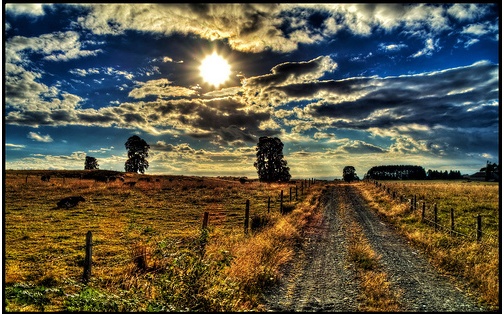
(Postcard from Valparaiso, Chile, my favorite city of the trip)

I’ve spent the past two weeks in Uruguay and Chile. They are both terrific countries that I recommend visiting.

Below are high level impressions and lessons from Chile and Uruguay (and a bit of Argentina), followed by other high level travel thoughts. (More informal play-by-plays are over at my travel blog. I already posted big picture thoughts on Argentina.)

1. Uruguay and Chile Are Alike; Argentina is Different. These are the three countries of the Southern Cone. Their commonality is climate. Each has four real seasons. Otherwise, put Uruguay and Chile in one box and Argentina in another. Whereas Argentina is politically and economically rocky, Uruguay and Chile, for all their historical challenges, at present are in remarkably good shape. Montevideo and Santiago are safe and clean. Try to bribe a police officer there and you’ll go to jail. You can take out more than a couple hundred dollars at a time from the ATM. There is a decent amount of national pride.

2. My favorite foreign countries have been Switzerland and Japan. Perhaps Chile gets added to the list. That should tell you all you need to know about my personality and tastes.

3. Beauty. Argentinean women and men are beautiful. This commenter nailed it: where the Argentine beauty shines is not in the 99th percentile but in the 40th percentile: "Cross below the mean in the US and you are dealing with someone seriously overweight and offensive. Cross below the mean in BA and you have a woman who is in shape, dressing well, doing her best but just not blessed with perfect bone structure."

Chilean men and women are not as beautiful. Cool, handsome young Chilean men don a mullet hairstyle. Yuck. I’m always intrigued when I find styles of beauty that do not conform to the usual Western expectation. Mullets in Chile certainly qualifies here.

4. Santiago Public Transit. Litmus test for how much a developing country has its shit together: the effectiveness and efficiency of their public transit system. Santiago's metro is a-ma-zing.

5. Walkability of Cities. In Buenos Aires, Montevideo, and Santiago I walked around more or less aimlessly. They all are quite walkable. When cities don't have "must see" attractions (like the Effiel Tower in Paris) walkability becomes critical to enjoying the place — you want to be able to meander down sidewalks, pursue side streets, stop in parks, etc.

6. Paying for Safety. How much are you willing to pay for not feeling like you need to look over your shoulder when passing someone on the street? How much are you willing to pay for smoothly paved roads? For trains that are on-time? For cops that aren't corrupt? Chile is the second most expensive country in South America (after Brazil). You pay for safety and stability on all these fronts. For some it's not worth it. They'd rather have USD $2 dinners in Lima and battle illegal taxis and corrupt cops.

7. Status Obsession and Signaling. In Montevideo, I heard third hand about a guy who advised an American businessman that in order to do business with rich people in Uruguay he’d have to live in a certain neighborhood and drive a certain type of car. He simply had to live in rich neighborhood X or else people wouldn't take him seriously. This kind of dependence on status signaling is very inefficient.

8. Culture and Fun. Everyone says that Chile is “boring” and Argentina is home to more “culture.” It’s true that Chile is more conservative – divorce only became legal a few years ago, and the Catholic church exerts its loving influence over everything social and sexual. Still, I saw more dancing, street festivals, and of course making out and kissing sessions in Chile (in every metro in Santiago there’s a couple getting it on) than in Argentina. Probably dumb luck. Anyways, there’s plenty to do and see in Chile: world-class museums, fine food and drink, and enough nightlife for any sane person with weekday professional ambitions. Buenos Aires has a European charm, sure, and probably 10% more dance clubs, but what does that matter for mainstream non-nocturnal people?

Other big picture travel thoughts:

1. "Ha ha! My accent is funny!" This rhythm of conversation can sustain some hostel-goers and gringo-trail-trekkers for weeks. An American or Brit goes to a hostel and laughs with locals about how funny their accent is, or how strange some cultural difference is. I find this kind of stuff fun and exciting….to a point. Then it gets old.

2. Jobs That Don't Need to Exist: You come across so many jobs in the third world that don't need to exist; an endless number of service "professionals" seeking tips by providing random services. The guy opening the doors of taxis at Aeroparque airport in Buenos Aires; the guy who must pump your gas in Uruguay (no self-serve); the guy who had to hand me toilet paper in the bathroom on the border of Argentina and Chile instead of just putting the toilet paper in the bathroom stall.

3. Endless ways to increase efficiency in transportation. Why is it that in every third world country public buses stop wherever and whenever there's a passenger waiting on the side of the road? Seriously.

4. Lifestyle arbitrage: Since the start the recession laid-off Wall Street financiers have flocked to Buenos Aires in order to keep up their crazy party lifestyle at half the cost. But lifestyle arbitrage can be an even better approach if you need to spend several months coding or writing or reading. You can get a nice apartment for super cheap and dine at fine restaurants for cheap, too. I say better because, if you're going to be indoors most of the time anyways, it doesn't much matter how decrepit the outside infrastructure is or how uneasy the security situation might seem.

[Like in Argentina, my travels through Chile and Argentina were made possible by the extraordinary genrosity of friends and readers. Big ups to Christina DesVaux, Carl Wescott, Adrian Dorsman, Lucia Dammert, Andy Cummins, and JK for all their help showing me around and hosting me.]


Impressions and Lessons from Argentina

Pinkhouseblog

I’ve been in Argentina the last 1.5 weeks. Buenos Aires, Iguazu Falls, and Cordoba. It’s a beautiful country, inexpensive, good food, friendly people, and functional transportation infrastructure.

It is not exactly undiscovered land. Buenos Aires has become the go-to place for laid-off Wall Street financiers to keep up their lavish lifestyle at half the cost. Argentinean women capture the imagination of men the world over (most recently, Mark Sanford). Even Iguazu Falls has become a stopping ground for Japanese tourists toting fancy cameras. (The litmus test for whether a non-Asia country is tier one is simple: Do Japanese tourists go there?)

Nevertheless, for those new to the country, here are some random high level thoughts and lessons from Argentina. Wield a salt shaker over the massive generalizations to follow.

1. National Pride and Brain Drain: Argentinians love the culture of their country – they especially love their beef and beauty. They do not love their country when it comes to politics or economics. Both sides of this sentiment coin seem well-informed. But the negative stuff is more consequential. When the people don’t trust their politicians or their banks, instability on both fronts follows, which slows overall economic growth and development. Slower growth means fewer opportunities at home, which means the most talented young people in Argentina want to leave for greener pastures abroad.

2. No Means “Not Yet”: The machismo of Latin men is legendary. Argentina does not seem exempt. The men are ridiculously forward in their advances on women. “No” means “not yet.” The women ask for it, though: they reward persistence, and will often decline advances three, four, five times before acceding, just to make a point.

3. Why Do the Buses Play TV Audio on the Loudspeaker? One of the more memorable experiences was taking a 20-hour bus from Iguazu to Cordoba. Steve and I had never taken a bus trip this long; we were sold on the novelty of it all. Novelty aside, the bus experience itself has much to recommend: comfy seats, professional staff, full-service amenities (two meals, drinks, snacks). The big downside? English language movies and music played for hours…on the loud speaker! No headphones requires. Passengers become an involuntary captive audience to the TV. Reading’s impossible.

Is it a stretch to draw a larger conclusion from this practice of blasting the audio through the loudspeaker, which I hear is the custom throughout all of Latin America? It would never happen in the U.S. Imagine getting on a 12 hour flight to Europe and having the TV audio playing loud the entire flight. People would go apeshit. What explains this? Do Americans prize individual preference more? Do Americans read more books or otherwise watch fewer movies and thus less interested in the TV?

4. Creativity and Culture. Buenos Aires likes to consider itself the Paris of South America. Visitors rave about its “creativity” and culture and cosmopolitanism. I noticed the European-esque architecture, but that’s about it. I personally have a low tolerance for self-important, self-styled “artistic” cultures, especially those with a hipster streak. I caught a whiff of this in BA.

5. Nightlife, Schedules, Work Ethic. Everything in Argentina starts late. On weekends, you’ll have dinner at 10 or 11, pre-game at 12:30 or 1, and get to a club around 2 AM and leave at around 5 or 6 AM. This is not an exaggeration. It’s insane. Meanwhile, the business world continues to operate more or less on international time standards – 9:30 to 6:30 workday. Ex-pats tell me being sleep deprived is just a way of life. Also, Sundays are spent sleeping. Of course not everyone parties and goes to clubs, but most young people do, and in the aggregate this must do serious damage to the country’s productivity.

6. Walk Aimlessly. Repeat. This was my travel philosophy in Argentina. Wander the streets and just look at stuff. Talk to people. There aren’t any must-sees in Buenos Aires or Cordoba, at least in my book. This lowers the overall stress. In Paris, if you don’t get to the Eiffel Tower, you’re pissed. You won’t have that feeling in Argentina. You walk around, eat steak, eat ice cream, and observe portenos do their thing. Day-to-day life seems quite pleasant and relaxed.

7. Non-Existent Banking System. Want to buy a house with a mortgage? Tough luck. All cash up front, baby. Want to do a commercial real estate deal in BA? All cash. U.S. dollars. In a briefcase. At the meeting.

###

Travel strengthens existing relationships. I have fond memories traveling through Japan with my Mom, Costa Rica with Stan and Maria, Prague with Massimo, Spain and Portugal with Austin, and Ecuador with my brother. In Argentina I traveled with Steve Dodson, a friend from San Francisco. We got along famously and the good times were non-stop. (Note: the overriding factor that determines whether a friend would be a good travel partner is his/her flexibility.)

Travel has also birthed new relationships with both locals in other countries and American ex-pats abroad. In Argentina I was grateful for the hospitality of reader and entrepreneur Nathan Labenz, and I’m looking forward to our new friendship. Nathan hosted me in BA and organized our trip to Iguazu. Also thanks to Carlos Miceli and Santiago L. for showing me around town.

Muchas gracias a todos!

Finalcropped

Urban Nomadicism: The Sources of Unhappiness for Serial Travelers

Who doesn't advocate traveling and especially living abroad? Everyone, it seems. I do. "Just go do it" is the travel advice most people need to hear.

But there are some who take the advice to an extreme. They become professional vagabonds. They backpack around for years, going from hostel to hostel, teaching English in Peru, working at a bookstore in Calcutta. Or there are the international elite who pick a career (e.g. consulting) that requires moving base camps every few years, even within their own country. Or there are the children of diplomats who grow up citizens of the world.

I envy much about how these people live their lives, but when I observe unhappiness, it can usually be traced back to one or more of these three issues:

Rootlessness

"Home" changes over the course of one's life. It starts at your place of birth. Half of Americans live within 50 miles of their birthplace. For the other half, what you consider home evolves over the course of time. The most comfortable transition is when "home" goes from A to B with no interlude. You might grow up in San Francisco (home), then move to Los Angeles (SF still home for awhile), until one day you realize that "home" is LA. Boom. It switches. But if you grow up in San Francisco (home), then move to LA, then move to Chicago, then Beijing, then Sydney, at some point SF no longer feels like home, but nor do any of the other cities. Where is your hearth? Where do you go for nurturance and renewal?

Shallowness of relationships

The best way to build intimacy in a relationship is to spend quality in-the-flesh time with each other. If you're always on the go, or never in the same place for more than a few years, intimacy can be hard to come by. It's hard to involve yourself in a long-term relationship if you're nomadic. It's true even for friendships. Thanks to technology it's rare that a friendship would ever move backwards in the absence of physical interaction — maintenance is easy these days — but technology can not accelerate intimacy in the way physicality does. It can even be hard to motivate yourself to invest in relationships as you think to yourself, "I'm leaving in six months anyway, what's the point in trying to find a best friend?" (People who have issues with intimacy of course will embrace this aspect of the traveler's life.)

Identity confusion

Where do I belong? Does the country name on my passport still accurately reflect my deepest national ties? How do I answer the question, "Where are you from?" If I'm living in a country where I am not a native speaker, will I ever be treated as a local?

###

By the way, the best way to understand a serial traveler or expat is to understand what they're escaping from back home. Oppressive parents? Unsuccessful social life? Failure? Racism? Unbearable boredom? Escapism is common to all. Then again, perhaps we're all trying to escape from something…

(tks Maria P. for helping brainstorm this)

Upcoming Travel: Latin America and Asia

Chile

(Photo of Southern Chile)

I will be in Argentina, Chile, and Uruguay in July, Beijing for two weeks in August, and probably Mongolia afterward.

I would appreciate hearing your thoughts on what I should do in my free time, who I should meet with, and how I should think about what I am doing. Remember it will be winter in South America.

Also, it has been a pleasure staying with blog readers in my travels, from Dublin to Mumbai, Shanghai to Rome. I find it the best way to understand another culture. If you live in one of these places and want to host me, let me know.

As always, thanks.

###

Here are various related posts:

Does Travel Narrow the Mind?

Does travel narrow the mind?

First consider Emerson:

Our first journeys discover to us the indifference of places. At home I dream that at Naples, at Rome, I can be intoxicated with beauty, and lose my sadness. I pack my trunk, embrace my friends, embark on the sea, and at last wake up in Naples, and there beside me is the stern fact, the sad self, unrelenting, identical, that I fled from. I seek the Vatican, and the palaces. I affect to be intoxicated with sights and suggestions, but I am not intoxicated. My giant goes with me wherever I go.

But the rage of travelling is a symptom of a deeper unsoundness affecting the whole intellectual action. The intellect is vagabond, and our system of education fosters restlessness. Our minds travel when our bodies are forced to stay at home.

Then Chesterton:

… There is something touching and even tragic about the thought of the thoughtless tourist, who might have stayed at home loving Laplanders, embracing Chinamen, and clasping Patagonians to his heart in Hampstead or Surbiton, but for his blind and suicidal impulse to go and see what they looked like. This is not meant for nonsense; still less is it meant for the silliest sort of nonsense, which is cynicism. The human bond that he feels at home is not an illusion. On the contrary, it is rather an inner reality. Man is inside all men. In a real sense any man may be inside any men. But to travel is to leave the inside and draw dangerously near the outside.

Andrew Sullivan summarizes:

The proper conservative resistance to travel is not, therefore, a blinkered resistance to the new; it is an understanding that we have never fully absorbed or understood what we already know; that the places we love are still mysterious, and understanding of them should never be mistaken for simple familiarity. Seeking new superficialities at the expense of familiar depths is a neurosis, not an adventure.

I find the above ideas fascinating but unpersuasive. As one of Sullivan's readers writes, "Inward and outward journeys are simply not opposed, and to pretend that they are in order to adhere stuffily to the superior excellence of the inward journey is just irritating."

I've found that travel can awaken the inner journey. Some of my most contemplative thoughts have come while sitting on a bench in a foreign land, looking around and recognizing nothing, and retreating inward like one runs inside from a cold day for a cup of hot chocolate.

For a final, different take on the value of travel, here's a unique David Foster Wallace footnote from his Gourmet magazine piece on lobsters:

As I see it, it probably really is good for the soul to be a tourist, even if it’s only once in a while. Not good for the soul in a refreshing or enlivening way, though, but rather in a grim, steely-eyed, let’s-look-honestly-at-the-facts-and-find-some-way-to-deal-with-them way.

My personal experience has not been that traveling around the country is broadening or relaxing, or that radical changes in place and context have a salutary effect, but rather that intranational tourism is radically constricting, and humbling in the hardest way—hostile to my fantasy of being a real individual, of living somehow outside and above it all.

To be a mass tourist, for me, is to become a pure late-date American: alien, ignorant, greedy for something you cannot ever have, disappointed in a way you can never admit. It is to spoil, by way of sheer ontology, the very unspoiledness you are there to experience. It is to impose yourself on places that in all noneconomic ways would be better, realer, without you. It is, in lines and gridlock and transaction after transaction, to confront a dimension of yourself that is as inescapable as it is painful:

As a tourist, you become economically significant but existentially loathsome, an insect on a dead thing.