Feeling More Awake Than You Have Ever Felt

Jay Kirk's good travel essay on Rwanda last year in GQ captured one hard-to-describe benefit of traveling:

…There is no other place on earth where you can visit mountain gorillas one day, discover the true cosmic dimensions of the banana the next, feel haunted and overwhelmed and harrowed to your very brink, and for the same price of admission, feel more awake than you have ever felt.

Maybe it’s the cold bucket of history over the head. Maybe it’s the collective effort of everyone around you to stay conscious, the shocked look of so many people who are still just waking up from the worst nightmare of their lives to realize that, yes, it was all for real. And while it’s true that you may question whether or not you were fully awake before you got here, you will also probably spend an inordinate amount of time trying to lull yourself back to sleep, wherever you can find alcohol, because part of you will realize that being awake, really awake—well, it’s just not in your nature. That is, if you’re like me and you hail from the land of the Xbox, and you’ve become accustomed to—even begun to desire—the substitution of the virtual for the real, you probably prefer the dream to the directly experienced. But no matter how stuck you are in your digital simulator, however “experientially avoidant” you may be (as I was recently diagnosed by a cognitive-behavioral therapist), you will not remain immune to this odd sensation of waking up in Rwanda to discover, however disconcertingly at first, that not only do you have hair growing out of your arms, but your body also appears to possess these extra dimensions you had not taken into account of late. That you have been going around for some time a mere half-awake version of yourself. Just as you now realize that all along you’ve been eating these things that bear only a half-awake resemblance to a banana. And this is because, in Rwanda, a banana possesses at least seven dimensions, whereas in America, like most everything else, you get two at best.

The reason why travel is exhausting is because hyperawareness of surroundings and self is exhausting — and that's the mode you fall into when traversing foreign lands.

I loved the opening of the article:

On our seventh day in Rwanda…on yet another devastated dirt road winding through yet another breathtaking landscape, Darren informed us that the hair on his arms appeared to be growing much more quickly than usual. Not an alarming rate, but still, more growth than he'd ever noticed back in Los Angeles.

He put an arm between the front seats of the Land Rover so we could see for ourselves. Ernest and I agreed: His arms looked ape-y. One expected to be changed by travel; one looked for little symptoms in oneself, signs of alteration, but did this count as a valid transformation?

Ernest had never heard of such a thing. Once, he’d had a client who’d come all the way from Australia just to punch a mountain gorilla in the face, but nothing quite like this.

Lessons and Impressions from Indonesia

Indoblog
I recently spent 1.5 weeks in Indonesia. I traveled all over the country (Jakarta, Semarang, Surabaya, Batam, though not Bali) and met some 2,500 students, businesspeople, journalists, and academics. In addition to sharing some of my own views and experiences with local audiences, I learned quite a bit about the country and its people. Below are my key lessons and impressions.

1. Size and scale. Indonesia is the fourth most populous country in world (220 million), an archipelago of more than 17,000 islands. It is the third largest democracy in the world behind India and the United States.

2. A moderate Muslim country. It is home to the largest Muslim population in the world (88% of 220 million). The government is secular and the Islam that is practiced is moderate. State law rules, not Islamic law. As just one small but telling example, there are many Muslim women who do not wear headscarves (though the majority do) and I did not see many men wearing a peci.  Religious freedom flourishes: look at Hindu-dominated Bali, the Christian population, and the various interfaith dialogues and groups. I remember noticing two women sitting next to each other in the audience once: one wore a headscarf, the other had a Christian cross draped around her neck. Contrast this to Saudi Arabia. There, women must always wear full body hijabs (covering head to toe with small slits for the eyes); if you’re seen with a person of the opposite sex in public you can be arrested; if you are caught carrying a Bible (or any other non-Muslim religious item) it’s grounds for punishment. So it’s easy to see why the United States, among other nations, holds up Indonesia as a shining beacon of tolerance and diversity in the Muslim world.

3. Optimism of the People. I surveyed many folks and the vast majority ID’d as optimistic. They think Indonesia will be a center of gravity in the future. They believe tomorrow will be better than today. The 21st century is the century of Asia.

4. Heat and Humidity. It’s impossible to walk outside for more than a few minutes without sweating your balls off. I love air conditioning, but I would not want my existence to be defined by it. Plus, humidity is the worst. In Arizona, when I walk outside it takes some time for the oven to heat my body to the point of sweating. In humid climates, when I walk outside I begin sweating almost instantly. While I’m undoubtedly more sensitive to it than locals who grew up there, I’m not that much different: Indonesian social life, I was told, is concentrated in fancy malls, which are safe, full-service, and most of all, air conditioned!

5. Hospitality, Formality, Status. Per my post on being introduced three times, there is a broader culture of hospitality that’s impressive and at times annoying.

6. Big Cities in Developing Countries. A general rule of thumb for poor countries is that the big capital cities are sprawling chaotic messes with traffic, pollution, and overpopulation, while the countryside tends to be calm and more interesting culturally. In Indonesia this is totally true. Jakarta is not very livable. I asked probably 10 people who live(d) in Jakarta whether they liked it, and none said yes. The unpredictable traffic. The humidity. The relative danger. Surabaya, the second largest city in the country, seemed far more livable — still a big city with all the amenities (4 million people) but no traffic and plenty of open space.

7. Politics and Economy. The current president was elected with overwhelming support, despite the huge amounts of corruption that plagues the government. Democracy’s recent introduction to the country seems to have more or less taken hold, though there are still aspects of democracy beyond voting that seem fragile. Discussion of internet censorship by the government is, for example, a topic of discussion, and I encountered some odd web site failures during my time there. The Indonesian economy is the big gorilla of the region. It runs mostly on light manufacturing. Rice is big here, and mostly sold within the country. Apparently this large internal market insulated the country a bit from the global financial crisis. Several American friends do furniture manufacturing in Surabaya; the chairs and TV stands you buy at Crate & Barrel or Cost Plus were probably made in Indonesia. Side point of interest: Chile had the “Chicago Boys,” Indonesia had the “Berkeley Mafia” — economists who studied there and brought back liberal economic reform.

8. Suharto Regime. You cannot understand politics in Indonesia without first realizing that the 65-year Suharto dictatorship ended only 11 years ago. Here is more on Suharto. It makes you appreciate Indonesia’s political progress.

9. Ramadan. My visit coincided with the holy month of Ramadan, a time when Muslims fast from sunup to sundown. In many places in the Middle East, I’m told all restaurants would be closed during the day. In Indonesia, many restaurants remained open, another sign of its religious diversity. It surprised me to see that when my Muslim hosts broke the fast at sundown after 9-10 hours of no food or drink they did so with a small piece of bread and drink, and then gradually amped up to real food. I’ve never fasted; in fact, I’ve never gone more than a few hours without food or drink. Especially given the heat, I was amazed at the restraint and discipline shown by my Muslim hosts.

10. Terrorism. Last year, terrorists released bombs in the Mariott hotel in Jakarta. The more famous 2002 bombing in Bali killed more than 200 people. The size and remoteness of certain parts of the country make it seem likely that radical groups will have the space to band together for some time to come. Nevertheless, the Indonesian government has been effective at capturing radical Islamist terrorist leaders. Just the other week a key radical cleric was arrested for having helped organized terrorist training camps.

I didn’t feel particularly unsafe anywhere in Indonesia. Note, at the big hotels, every time you enter you have to submit to a metal detector and car-search. But like in so many places, if you’re white, you can walk right through and nobody searches you or scans for metal. When will the terrorists figure out that being / appearing white is the way to evade all security in third world countries?

11. Reading. I took three inter-country flights and observed very few people reading either on the planes or in the airport. I tend to use this as a litmus test….for something.

12. Asian Neighbors and Immigrants. They don’t like the Malaysian people. I heard stories about Malaysia’s actively racist government policies that punish non-Malays. Not sure how accurate it is, but the Indonesians I spoke to see themselves as a more enlightened society. On the immigration front, Chinese Indonesians have been there for a long time and though they represent only 1% of the population they are power brokers in business. The nice business hotels in the country are full of Chinese Indonesian businesspeople.

13. Inexpensive. It’s a super cheap country across the board. India is dirt cheap but expensive as far as hotels go. Indonesia is cheap in everything. True 5 star hotels for US $100 night.

14. Israel. At one event the host at the school announced that (paragraphed) “We are to love all people, Jews, Christians, Hindus, everybody.” I was told that it was most unusual to specifically mention, let alone start with, Jews. The anti-Israel sentiment in Indonesia is just political. People don’t think Israelis should have set up a new state in Palestinian territory, and so they resent the state, the people, and of course the country that’s backed Israel since the beginning: America. Before Obama (who spent time in Indonesia growing up), most Indonesians had an unfavorable view of the U.S., mostly because of Israel, I was told.

15. Entrepreneurial Culture.  I did meet many very energetic and talented young entrepreneurs, and there is a big push within the country to seriously amplify the focus on entrepreneurship. The limiting factor, as it is almost everywhere, is culture. Not a huge acceptance of risk-taking or failure, overbearing parents, etc etc. Same old story. BTW, on the broader business culture, I found it cool that a man can wear either a suit and tie for a formal occasion, or a local batik — a brightly colored shirt that looks like a Hawaiian short sleeves shirt. Both are considered equally formal.

Bottom Line: Indonesia is a diverse country of rising geo-political interest with very kind people. For these reasons it’s worth a visit. The weather is a deal breaker for me in terms of longer stays, and that goes for all ultra-humid tropical climates.


I thank my various friends and hosts, and to Daniel Phelps for helping me think through the political and economic situation of Indonesia more specifically. (These views are my own and do not necessarily reflect those of the U.S. government.)
Cultural Values, Power, and Event Protocol

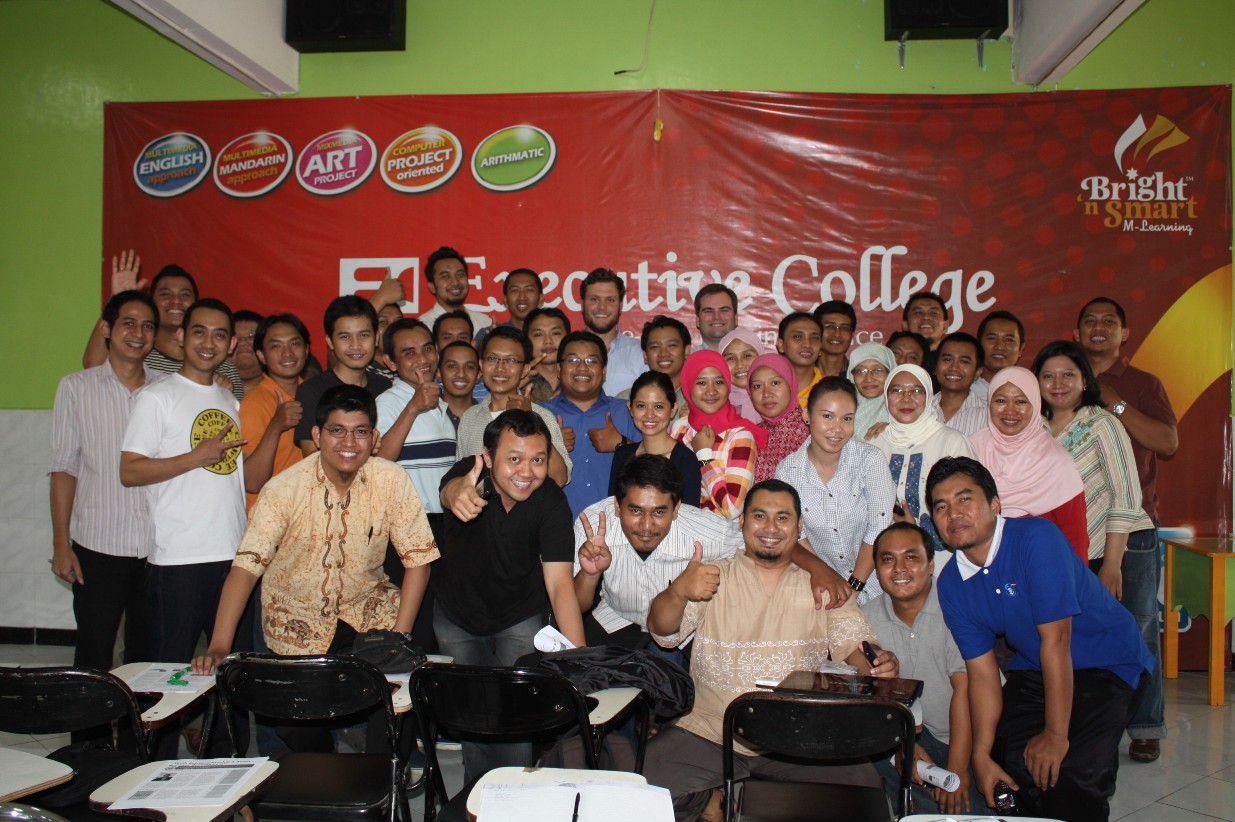
Earlier this week in Indonesia, before I went up to give a speech, I was introduced to the audience exactly three times. Three different Important People of the sponsoring organization went to the podium and read the same bio to the same audience. Three. Times. In a row.

In addition to re-introducing me, each Important Person re-thanked other important people in the room, one-by-one, using their full titles, and then riffed yet again on the goals of the event. There were various other formalities related to these Important People like photographs and staged handshakes. It went beyond typical, lovely Asian hospitality: as the audience sat captive, the Important People were making sure everyone in the room knew they were important.

My worldly Indonesian interpreter told me these time-wasting rituals are left over from the Suharto regime. Interesting! Dictators are in the business of keeping the masses subservient. Beyond killing dissenters, I’d imagine a savvy dictator would try to psychologically disarm the people through the careful manipulation of social situations. Since explicit power plays can be self-defeating, dictators (and entrenched interests in general) might cultivate obedience by introducing small customs that subtly reinforce the power of those who hold it.

In my experience, what happened in Indonesia happens in almost every part of the world. I’ve personally witnessed such over-the-top obsession with titles and power at events in Latin America and Asia. I’m told Africa is the same.

It’s not as intense in Europe it seems, though there is still an emphasis on formal status and on highlighting the differences between people even if those differences are irrelevant to the topic at hand. I remember listening to Martin Wolf being introduced in St. Gallen, Switzerland, and hearing first about his degree from LSE 40 years ago instead of his rich journalistic career. I also remember looking at my friend’s EU passport on that trip and, to my astonishment, seeing that it listed his advanced degrees (PhD, J.D.) next to his name on the main passport ID page, as if academic degrees were as important as gender when crossing a border.

These customs reveal certain underlying values in a society.

In an older post I discussed the cultural ethos of Formality vs. Casualness. Casualness — in attire, in manner of speaking, in the way names are presented on paper — maximizes commonality among people. Formality maximizes difference. A related dichotomy is Past vs. Future. Past emphasizes past accomplishments and titles, your family and cultural history, and gives great deference to elders. Future emphasizes what you are doing today and who you aspire to be tomorrow. Future-oriented cultures, for better or worse, favor the energy of youth over the wisdom of elders. America is a decidedly casual, future-oriented culture, and this is partly what makes it unique.

In any case, it’s interesting that cultural values of this sort can appear so visibly in how events are staged and speakers introduced.

Impressions of Brazil

IMGbrazil

(Me on the iconic mosaic promenade next to Copacabana beach on the one rainy day)

I recently spent 10 terrific days in Rio de Janiero and Paraty, Brazil.

It was more vacation than fact-finding so I skipped Sao Paulo and the normal set of meetings I would have arranged to discuss the politics and economics of the place. My impressions, then, are less intellectual and more experiential.

1. City / Beach. The beaches of Rio are stunning. But there are stunning beaches all over the world. Rio is different because a big, bustling city juts up right against the beach. As you lie on white sand, in front of you is ocean, islands, and green trees. Behind you are tall buildings, and hills packed with small homes. There is a certain allure to the remote island beach. But those places usually lack good infrastructure nearby. The Rio beaches are as beautiful as any I've seen, and there are plenty of bathrooms, food markets, showers, wi-fi, etc. nearby.

2. People. The Brazilian people were super energetic, diverse, friendly, and of course, very beautiful. I spent a good hour sitting on a beach chair on Copacabana beach, drinking a fresh coconut, and just watching all the people bustle around me. (And then several more hours reading books.) The racial diversity among beachgoers was striking. The commitment to string bikinis, even among 75 year-old 150-pounds overweight women, was impressive.

3. Safety. I've never traveled to a place where I had heard so many first-hand accounts of people robbed or mugged. Statistically, too, it's supposed to be bad: it is the top-ranked city in the world for "violent international deaths." This reputation probably explains why we saw so few Americans. I didn't feel unsafe at all, though. Granted, I stayed in the nicer neighborhoods and didn't wander around centro at night. But I felt more exposed in Buenos Aires than I did in Rio, and that includes comparing the airports and bus stations.

4. Paraty. This is a small colonial town in-between Rio and Sao Paulo. It is a lovely, sleepy place, with cobble stone streets downtown, beautiful ocean-front views, and rural dirt roads. Boat rides, horse riding, and plain old hiking all easily available.

5. Soccer. Soccer was everywhere. Truly, everywhere. Rich and poor, young and old. On beaches, on grass fields, on cement courts, on dirt paths. It makes sense that Brazil is a soccer power: when the best athletes in a country of 190 million people are funneled into one sport, they're bound to be good.

6. Favelas. We went on a tour of two Rio favelas, the famous shanty towns / slums erected on public land and run primarily by drug lords. There's much poverty. Some live underground and access the above-ground world via a maze of tunnels and ladders. Still, there is quite a functioning society in the favelas. Every store you could imagine. Banks. TVs. Etc. The main story doesn't seem to be jaw-dropping objective poverty (India is far worse) but rather the proximity of poverty to the wealth of Rio. The American School in Rio costs some $30k a year to attend and sits literally three minutes away from a favela. We were told on the tour that different drug cartels run different favelas but since they guarantee safety to the people (so long as they don't report any activity) the drug-run hoods are quite safe to live in. When police catch a kingpin from one cartel they will simply drop him off on the streets of another favela to ensure his swift death. Oh – and my ears may have deceived me, but I thought I heard a kid yell at us on the tour, "They don't even care about us."

7. Kites. Brazilian kids are obsessed with flying kites. Especially in Paraty. This was so memorable that it's worth its own point.

8. Patriotism. The people seemed extraordinarily patriotic. Many donned the national colors. Flags draped buildings and cars. Maybe this was simply leftover World Cup fever. But I felt something more. The Rio Olympics in 2016 may serve for Brazil a similar purpose as the Beijing 2008 games did for China: an announcement to the world that Brazil, pregnant with potential seemingly forever, has at last arrived on the global stage.

Chris Sacca on How International Travel Informs Entrepreneurship

My friend Chris Sacca, micro-VC and former Googler, in a recent interview on TechCrunch TV says he prefers to hire people in Silicon Valley who've traveled / lived outside the United States:

Folks who have been exposed to [the developing world] tend to be a lot easier to work with here. They see the bigger picture, they feel lucky to be in such a privileged setting, and they go after what they're doing not just as a for-profit entrepreneur but they see a much more whole approach to business.

He goes on to talk about how traveling abroad forces humility on you. It also builds patience, in my experience.

On Silicon Valley, Chris says:

Silicon Valley is a way of thinking about business: it’s a way of focusing on end users and their problems; it’s a way of hiring smart people, paying them relatively little, but giving them equity in the company; it’s a way of sharing information with the people that you work with, flat transparent organizations… peers working side by side to solve problems; it’s a lot of optimism, it’s a lot of focusing on big problems and audaciously trying to pursue solutions there.

Below is the embed. In other clips, Chris talks about The Next Big Thing (mobile), Twitter, and other topics.