Why to Move to a New Place: It Slows Down Time

Steven Johnson, author extraordinaire, is moving from New York to the Bay Area (at least for a little while). Here's one of his reasons:

And then there's the passage of time. Another old friend — my oldest, in fact — wrote an email to me after I told him the news of our move. We've both been in New York for two decades, and we are both watching our kids growing up at lightning speed. "Change like this slows down time," he wrote. When you're in your routine, frequenting the same old haunts, time seems to accelerate — was it just four years ago that our youngest son was born? But all the complexities of moving — figuring out where to live, getting there, and then navigating all the new realities of the changed environment — means that the minutes and hours that once passed as a kind of background process, the rote memory of knowing your place, suddenly are thrust into your conscious awareness. You have to figure it out, and figuring things out makes you aware of the passing days and months more acutely. You get disoriented, or at least you have to think for a while before you can be properly oriented again.

So that is why we are moving: for the natural beauty, yes, and the climate, and the Bay Area tech scene, and the many friends out there we haven't seen enough of over the past twenty years. But more than anything, we're moving to slow down time.
Las Vegas: Authentically Unauthentic

Lasvegas

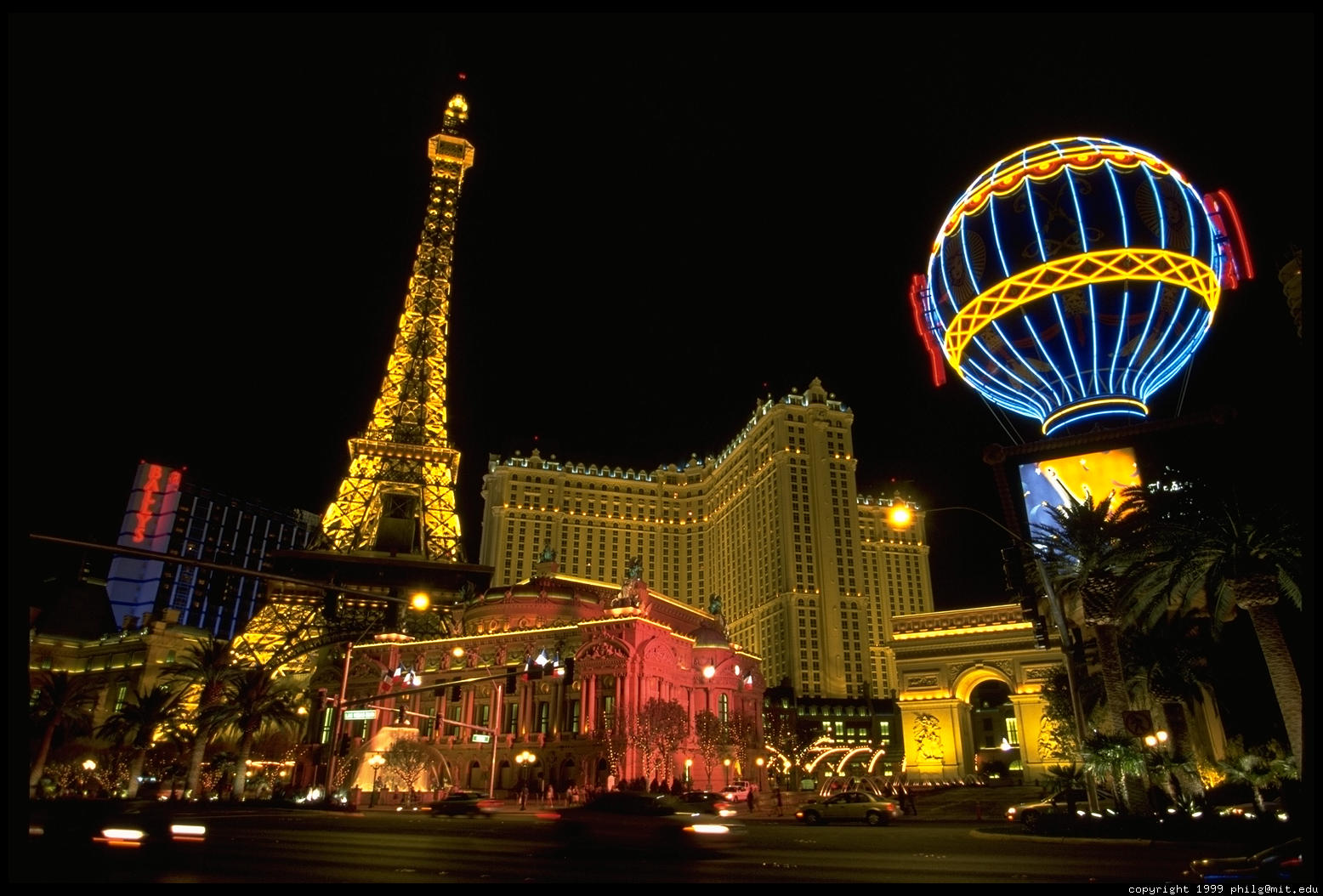
I recently spent a long weekend in Las Vegas. The buffets were outstanding, the weather warm and pleasant, and the hotels stunning. (I hadn't been there in probably 10 years — a lot has changed.) But the main reason Las Vegas was a surprisingly relaxing city to spend time in is because it is a city that's authentically unauthentic.

When you visit New York City, you worry about whether you are being a tourist, about whether you are doing as the locals do. Same with visiting Paris, Rome, London. But in Las Vegas, everybody is a tourist. Anybody who's not a tourist works in the tourism/hospitality industry. There is no real thing. It's fake all the way to the bottom. The very idea of a sprawling, water guzzling city that sits in the middle of barren desert is too absurd to take seriously.

There was no sin for me in Sin City, but I still found it a nice place to spend a few days in the winter to overeat, have my photo taken in front of the Effiel Tower, walk the strip, and lie by the pool.

Guilt-Free, Pain-Free Solitude When Abroad

6a00d8341bf6f553ef00e54f5024ef8834-640wi

At a recent dinner with American friends who I met in Chile but who are now back in the States, we went around the table and each of us said what we miss and don't miss about that skinny, long beautiful country in South America.

I said I missed the cheap, plentiful lunch menús; the physical beauty and diversity; the on-time metro in Santiago; the challenge of a foreign language. Most of all, I miss the immense stimulation of day to day living in another country. Just walking down the street most days taught me something.

I said I didn't miss the lack of ethnic diversity; how far away the country is from everything else; the challenge of a foreign language; the lack of English language media and books; the poor customer service in companies. I don't miss sticking out so much — so obviously being from somewhere else. (Though, that also had its attractions.)

One person said something interesting. She said she missed "the loneliness of Chile." She explained.

When you're in a place where you don't know anyone and where you're not expected to know anyone, it's easier to enjoy your own solitude. If you don't want to do anything on the weekends, you don't have to — you aren't getting many incoming calls or text messages. If you don't have anyone to hang out with on the weekends when you do want to, well, that's okay, because after all, you are a million miles away from your home base.

When you're in the city or state or even country where you grew up and speak the language, you're expected to have vibrant relationships, wonderful friends, constant companionship. If you want to be alone, you likely have to deal with inbound social requests or feel guilt about not reaching out to your friends. If you want to hang out with others, but have no one to hang out with, you'll feel lonely. If you want to hang out with others, and do, but find your friends underwhelming or distant, you feel even lonelier. Essentially, when home, your expectations for relationships are higher than they would be when abroad, and it's easier to feel disappointed.

I thought that was the most interesting insight of the dinner.

#

To be sure, too much solitude over the long run isn't a good thing, and it's a common problem in long-term expats, I think. See my post Urban Nomadism: The Sources of Unhappiness of Serial Travelers.

Cities Built Around Airports (and China Fact of the Day)

China is building 100 new airports by 2020. By the time that’s all done, 1.5 billion Chinese will live within 90 minutes of an airport.

That's from this review of the forthcoming book Aerotroplis: The Way We'll Live Next, which looks interesting.

The book's premise is that future cities will be built around airports as opposed to the other way around:

What rules in today’s globalized economy is accessibility and speed, and modern airports are its fastest connection points—the physical embodiment of our increasingly e-commerce-driven world. Yes, the vast bulk of trade still goes by sea, but already one-third of its value travels by air. Indeed, the value of air cargo has grown more than four times faster than global trade over the past several decades.

And more:

Individual companies don’t compete. Supply chains compete. Networks and systems compete.” Soon to join that global competition are planned mega-airports/cities right out of the Kasarda playbook: the “aerotropolis emirates” of Dubai, Abu Dhabi and Doha, where ambitious monarchs are “playing SimCity for real”; and South Korea’s stunning New Songdo City, a metropolis built around an airport built on a man-made island—a “pocket Manhattan” designed to rival Hong Kong for the cargo connectivity to mainland China that it offers the world economy.

The co-author is Greg Lindsay, who writes about "the intersection of transportation, urbanization, and globalization." For one article he wrote, Lindsay spent three continuous weeks in airplanes or airports.

As someone who has spent too much time looking up UPS and FedEx cargo routes and international commerical flight routes, and spent too much time perusing the message boards of flyertalk.com to read about airport lounges, mileage programs, and the business prospects of the new SFO-ZRH non-stop — I am looking forward to this book!

(On a related note, I reccomend this USA Today Twitter feed for the latest airline industry news.)

Airport Departure Boards and Imagination

P03L

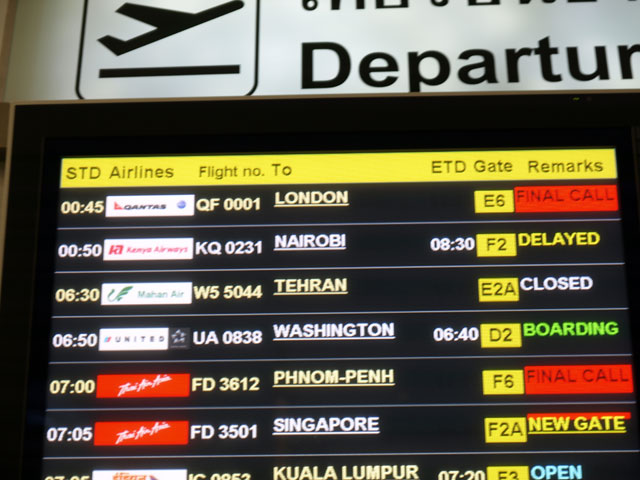
Last year I began writing a novel as part of NanoWrimo. The opening scene: a washed up management consultant walks into LAX and sits crosslegged in front of the international departure board, letting his eyes rest on each exotic destination.

Alain de Botton, in an interview on LATimes.com, talks about how airport departure boards light up our imagnations:

Airport departure boards help to put us in touch with the idea of alternatives. They make us think that right now, somewhere on the other side of the globe, very different things are happening. They do that very basic task of the places of travel: jolt us into remembering that the world is stranger, more exciting, more various than we imagine it when we are in familiar surroundings, and in danger of boredom and routine.

Next time you're in an airport, stop at the departure board and take a minute to contemplate the possibilities. It's my favorite thing to do in airports.