The Wisdom of Magnus Carlsen

Der Spiegel did an interview with the #1 chess player in the world, Magnus Carlsen. He's 19 years-old. He comes off as incredibly normal. And very wise.

On the downsides of being too smart:

Of course it is important for a chess player to be able to concentrate well, but being too intelligent can also be a burden. It can get in your way.

On the advantages of being young and curious today — you have so much info available at a young age:

my success mainly has to do with the fact that I had the opportunity to learn more, more quickly. It has become easier to get hold of information. The players from the Soviet Union used to be at a huge advantage; in Moscow they had access to vast archives, with countless games carefully recorded on index cards. Nowadays anyone can buy this data on DVD for 150 euros; one disk holds 4.5 million games. There are also more books than there used to be. And then of course I started working with a computer earlier than Vladimir Kramnik or Viswanathan Anand.

On his thinking style, which will resonate with anyone who doesn't like formal schooling:

I’m not a disciplined thinker. Organisation is not my thing; I am chaotic and tend to be lazy. My trainer recognised that and as a rule allowed me to practise whatever I felt like at the time….When I am feeling good, I train a lot. When I feel bad, I don’t bother. I don’t enjoy working to a timetable. Systematic learning would kill me.

And perhaps the perspective that shows he will remain king of the hill for awhile:

Chess should not become an obsession. Otherwise there’s a danger that you will slide off into a parallel world, that you lose your sense of reality, get lost in the infinite cosmos of the game. You become crazy. I make sure that I have enough time between tournaments to go home in order to do other things. I like hiking and skiing, and I play football in a club.

###

George Friedman's clear overview of the U.S. geopolitical interests in Israel is an example of why I subscribe to his weekly newsletter.

Here's a good overview of the effectiveness of nutritional supplements. I take fish oil and a multi-vitamin.

Here's a "how to write" post, including: "Find the weak points in your argument and acknowledge them. Hell, celebrate them." 
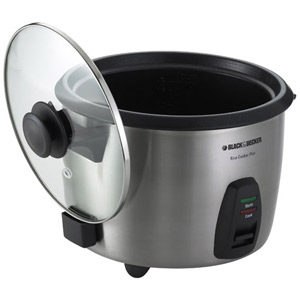
The Rice Cooker

The first thing to know about a rice cooker is that it knows more than you.

It knows when the rice is done.

ItBlack-&-decker-20-cup-stainless-steel-rice-cooker knows when the shrimp is cooked.

It knows how to keep food warm for hours on end.

It probably knows more about your emotional state of being in the kitchen than anything or anyone else.

How? "It's a mystery of the orient. Don't ask questions you don't need the answer to."

So, take it from me, a man who has challenged the Cooker's authority two too many times: be deferential in its presence.

The second thing to know about rice cooker is that it is arguably the most versatile piece of kitchen equipment yet invented. How versatile? Think of how versatile peanut butter and cottage cheese are: it's that versatile. Think of Kobe Bryant now with a post game. Think Philip Seymour Hoffman doing the Big Lebowski, Capote, and Doubt.

Want to cook white rice? Done. Brown rice? Done. Banana nut bread? Done. Steam vegetables? Done.  Korean BiBimBap or Chicken Biryani? Done. Want to liberate women in Iran? According to the New York Times, thank rice cookers.

Roger Ebert, in the face of such variety, just calls it "the pot." Me? I'm a religious man. I call it "El Padre."

Bottom Line: Love the rice cooker because the rice cooker loves you.

The “It” Quality

In the business world investors are looking for TheGuy, according to Randall Stross:

The guy. No special emphasis on either the or guy, but no intervening pause, either. TheGuy. That’s the person needed to head a start-up once it has grown beyond a seed. To wit, a stud, ideally, a big honkin’ stud or a total fuckin’ stud. He (or yes, she) will not lack for balls, at least in one sense, but in another will work his nuts off, or his ass off. A high-hustle guy. A total can-do guy. A winner. Smart. Someone with integrity off the charts. Scrappy. A kick-ass dude, a nail-eatin’, nut-crushin’ decision maker, a competitor with killer instincts. Someone who attracts and hires A’s, unafraid to hire above himself. A player. A hitter.

You can abbreviate it: They’re looking for an entrepreneur who has “it.”

When businesspeople don’t have “it,” you can tell. From the Vanity Fair profile of Arthur Sulzberger:

Here, in a nutshell, in the words of a veteran Times staffer, is what is supposedly wrong with Arthur: “He has no rays”—rays, as in the lines cartoonists draw around a character to suggest radiance, or power. In the comics trade these lines are called “emanata.” The emanata deficit is a standard insider lament about Arthur, although most Times people need a few more words to make the point.

“It” means more than “very smart.” Besides suffering from word inflation, “smart” doesn’t capture energy, zest for life, incredible get-shit-done capabilities, and general radiance that seem to accompany these people. It’s the total package.

In the sports world, elite athletes who always take care of business often earn the “it” label. I once watched a football game and heard the announcers say the quarterback has “it.” They went on to say, He is a baller, He is a player, He is a competitor, He is hyper talented. But none of these things seemed sufficient. At a loss, they said again, “He just has ‘it.'”

Finally, the “it” quality lives large in the world of beauty. Supermodels seem just normally beautiful at first. Why do the cameras never tire of them, then? Supermodel beauty involves, among other things, “uncanny symmetry and harmony to their features so that once you start looking at them it becomes difficult to stop.” It’s regular high ranking beauty plus this other harder-to-describe stuff (“harmony to their features”?) that make it work.

You know it when you see it.

Spirituality Fuzziness and The God Within

A year ago I wrote a post about the in-vogue-but-fraught-with-ambiguity self-identification "Spiritual but not religious." My main criticism of this category is that it's so broad as to lack any specific meaning, and people who ID this way usually do not seem focused on adding clarity. Instead, they enjoy the ambiguity that seemingly absolves them from forming clear beliefs (even if a belief is "I don't know if God exists").

But there's another problem with "spiritual but not religious" and its New Age influence: it tends to devolve into a kind of self-worship. A great example is the GQ interview with John Edwards' mistress Rielle Hunter. Here's Hanna Rosin’s take on religion of the self: 

… I read Rielle’s interview and immediately thought of many yoga teachers I’ve met, the acolytes of Marianne Williamson and other devotees of what they call “Eastern” religion. The blossoming New Age/Buddhism lite that populates yoga classes talks about the toxic nature of the Western “ego” (you know, we work too hard, we value ourselves above others, etc.) But then it replaces this ego with something like a supreme inner deity residing in all of us whose dictates can never be ignored … you call it silly but to Rielle it’s so profound—divine, even.

Ross Douthat, who found the Rosin post, says it calls to mind this passage from Chesterton:

Of all conceivable forms of enlightenment the worst is what these people call the Inner Light. Of all horrible religions the most horrible is the worship of the god within. Any one who knows any body knows how it would work; any one who knows any one from the Higher Thought Centre knows how it does work. That Jones shall worship the god within him turns out ultimately to mean that Jones shall worship Jones. Let Jones worship the sun or moon, anything rather than the Inner Light; let Jones worship cats or crocodiles, if he can find any in his street, but not the god within.

The “Easy Out” Email Technique

Life is a sales call. Every day we're trying to sell something to somebody — from as little as convincing someone to join you for dinner to as big as selling a potential employer on your credentials. That's why it pays to study sales and psychology.

Most sales activity these days happens over email. So it's important to think through how you can craft emails that get the response you're looking for.

My friend David Cohen, executive director of TechStars (apply to Boulder now!), blogged about a good technique to use that he calls "the easy out." If you've been emailing someone who is not responding and you've followed up by phone and still are not getting an answer, try this:

You can send an email that says something like “It’s been some time and after several attempts, I haven’t received a response from you about my proposal. I realize this may not be a fit for you, but I was hoping you could just let me know for sure with a quick reply so that I can cross you off my list.”…

Magically, you’ll find that providing the easy out sometimes triggers action. Psychologically, it feels like a last chance to the recipient. I’ve noticed that the easy out is generally effective at separating the “maybes” into “No” and “I really am interested – I’ve just been busy.” Most people won’t ignore the easy out (if they receive the message), and their reaction can be telling of their true intentions.

I'll be writing about this topic more later in the year. Let me know if there are other situations where you are interested in how to get the attention of a busy person.

###

  • Imagine if the SAT lasted two days, covered everything you've ever studied, and decided your future. Welcome to China.
  • When things go wrong or when your expectations are not met, the first words out of your mouth should be: "Hmmm. Interesting."
  • Cool time lapse video of a guy who drove from Los Angeles to New York.
  • What's the difference between liberals and libertarians? Arnold Kling outlines the key points.
  • Long piece on Dave Eggers. "I need eight hours to get 20 minutes of work done…and seven hours of self-loathing."