Blurring the Professional and Personal Lines at Work

I recently had dinner with a CEO of a fast-growing startup. He told me that he wants his employees to have deep, emotional relationships with each other, which often means becoming great friends outside of work. He wants his employees going to each other’s weddings. He wants to blur the lines that normally separate “colleague” and “personal friend.”

This value manifests at his company in at least two ways. The first is simply the language he uses, saying things like, “I want you all to be great friends outside of work!” or “It’s awesome that Joe went to David’s wedding.” The second is by the team activities he schedules. For example, “Let’s grab beers at the bar after work” or “Let’s all do a hike on Sunday.”

I wrote recently about the values that distinctively shape a culture. They aren’t values you see on official company press releases like “integrity” or “excellence.” Rather, they’re ideas that have both pros and cons. For example, transparency up and down the org chart has upside and downside, so as a value and policy it uniquely shapes those companies that embrace it. Consensus-driven decision making is another example of a value that has upside and downside.

This particular example — promoting social activities that blur the lines at work so that there isn’t as as strong a distinction between “friends” and “colleagues” — is another solid example of a cultural value with both pros and cons.

The pros to blurring the social lines among your employees are fairly obvious:

  • Stronger trust among the team. When you hang out in non-work settings, you tend to get to know other side of someone and this greater familiarity likely leads to greater trust when back at the office.
  • Improved communication. More time together, more time communicating. More communication is always a good thing.
  • Better employee engagement and retention if employees feel like some of their best friends are at work. For someone who has great friends at work, it’s more than a job and it’s more than the company mission. It’s about the deep relationships he or she is forming. Presumably, this translates into superior engagement on the job and higher overall happiness.

The cons to blurring the lines are more subtle:

  • Sexism and tricky gender dynamics. It’s exceedingly hard for women and men to be close personal friends in general due to sexual tension. This is a fact of life: see this famous clip from When Harry Met Sally. So there’s necessarily awkwardness in a work culture that promotes employees chumming it up in personal settings. Popular after work activities like “let’s all grab beers at a bar” can create awkwardness for female employees if they’re in the distinct minority. Sadly, some male leaders, recognizing potential awkwardness of co-ed out-of-office socializing, make it easy for themselves: they invite only other guys to the bar to watch the game. This greases a two-tier culture: the men are buddy-buddy, hanging out after work and on the weekends, and the women, with no company-organized outings to facilitate off-hours bonding, don’t forge the same tight bonds. By the way, the CEO whose blur the lines philosophy inspired this post has roughly 50 employees, 85% of whom are men.
  • Many employees prefer boundaries. Some people don’t want to grab beers with colleagues after work. Some people don’t want to hike with co-workers on the weekend, especially folks with families. Sure, it’s not a big deal for people to decline the weekend hiking invitation, but just receiving those invitations and feeling pressure to go on them can provoke guilt and light weight irritation. A culture where everyone is expected to be friends outside of work might repel prospective high-talent employees who want more work/life separation. Given the kinds of people who work at startups, entrepreneurs tend to promote a line blurring culture in the early days, but this is harder to maintain as a company scales and needs to draw on a more diverse and older portion of the professional population.

Personally, I blur the lines between professional and personal in many of relationships, which is to say some of my best personal friends I met originally in a professional context or are people with whom I still work professionally. But making this instinct a part of a corporate culture raises different considerations.

Bottom Line: Within a company, there are obvious benefits and less-understood risks to suggesting employees become close personal friends outside of work an explicit part of the culture. Male CEOs in male-dominated companies should be especially aware of the downsides, as should startup CEOs who need to attract an increasingly diverse professional population as they grow.

What Possessors of Maxims and Scriptures Can Teach Us

The first three paragraphs of William T. Vollmann’s ode to the Gnostic scriptures drew me in, both for the quality of the writing and the substance of the ideas.

Have you ever wondered whether this world is wrong for you? A death, a lover’s unabashed indifference, the sufferings of innocents and the absence of definitive answers — don’t these imply some hollowness or deficiency? For my part, the wrongness struck when I was 4 years old. I was at my grandmother’s house, and I saw a cat torture a baby bird.

Hoping to understand the purpose of our situation, I visit possessors of maxims and scriptures. Most of them are kind to me. I love the ritualistic gorgeousness of Catholic cathedrals, the matter-of-fact sincerity with which strangers pray together at roadsides throughout the Muslim world, the studied bravery and compassion in the texts of medieval Jewish responsa, the jovial humility of the Buddhist precept that enlightenment is no reward and lack of enlightenment no loss, the nobility of atheists who do whatever good they do without expectation of celestial candy — not to mention pantheists’ glorifications of everything from elephants to oceans. All these other ways that I have glimpsed from my own lonely road allure me; I come to each as a guest, then continue on to I know not where.

Baptized a Lutheran, I sometimes wander through the Bible, drawn in particular to those deep, strange stories that so many of us know after a fashion: the creation, the temptation in Eden, Christ’s execution and quiet return. As a reader and writer, I most love the tales that raise difficult questions: Why did an all-knowing God install Adam and Eve in a situation where they would surely disobey him? Why was eating fruit from the tree of knowledge a sin? Do I truly comprehend Christ’s enigmatic sacrifice? And why do cats torture birds?

Strengths and Weaknesses Are Connected

When people seek to define areas of potential improvement they often look to address weaknesses or build upon strengths. But thinking about strengths and weaknesses as independent attributes fails to recognize their inherent interdependence.

One day, while working with Reid Hoffman, I shared with him a self-evaluation of my work, my goals, and my strengths and weaknesses. When I discussed how to compensate for certain weaknesses, he told me, “Most strengths have corresponding weaknesses. If you try to manage or mitigate a given weakness, you might also eliminate the corresponding strength.” And if you try to expand upon a strength, you may also expand upon a weakness.

Reid shared a personal example about himself. He is not particularly well organized. But perhaps his day-to-day chaos partially enables his creativity. Creativity involves connecting disparate ideas. The man is a non-stop generator of ideas — perhaps the unstructured tempo of his life is a positive enabling force. How intensely organized you are and how creative you are may be two opposite sides of the same coin.

Another example from his life: His loyalty and generosity with friends is a strength. Friends are so important to him, and he to his friends, and the stellar results of his collaborations with friends are for all to see. But sometimes he gives too much and sometimes his friends take too much and it pulls him away from taking care ofhimself.

This two sided coin idea informs one of Reid’s classic strategy jujitsu moves: turn your weakness into a strength. For example, if you’re a startup and worry your lack of a track record is a liability to customers, instead of wishing it away, figure out how to turn your newness into a strength when marketing — perhaps it means you’re more agile or more personalized or more responsive.

On an individual level, if you worry that you’re not a good writer make a point to be great on camera and with video. You aren’t a fast thinker? Be known as deliberate, careful, detail-oriented. And so on. Here’s a good post on how to re-frame other limitations as potential strengths.

Bottom Line: Find the silver lining of strength in every weakness and remember that strengths and weaknesses tend to be connected — you cannot eliminate one without the other.

See my full essay 10,000 Hours with Reid Hoffman: Lessons on Business and Life for lessons and insights from Reid.

The Dangers of Empathy

Photograph: Samantha Stock

Paul Bloom makes a persuasive argument in the Boston Review about the dangers of empathy as a guide for making moral decisions. He begins definitionally: there is a difference between what is sometimes called “cognitive empathy,” the capacity to understand the thoughts and emotions of others, and “emotional empathy,” the capacity to feel what others feel. He’s referring to emotional empathy.

Everyone seems to think empathy is an unabashedly good thing. Bloom says no.

First, “Strong inclination toward empathy comes with [individual] costs.”

Individuals scoring high in unmitigated communion report asymmetrical relationships, where they support others but don’t get support themselves. They also are more prone to suffer depression and anxiety. Working from a different literature on “pathological altruism,” Barbara Oakley notes in Cold-Blooded Kindness (2011), “It’s surprising how many diseases and syndromes commonly seen in women seem to be related to women’s generally stronger empathy for and focus on others.”

Moreover, an individual who’s less empathetic may be a better professional in certain contexts. Bloom writes that in one-on-one interactions with doctors, we seek them to be cool, calm, and collected — not necessarily empathetic.

More broadly, empathy distorts wise policy making and philanthropy. Some think apathy makes us better altruists:

“the empathy-altruism hypothesis” is when you empathize with others, you are more likely to help them. In general, empathy serves to dissolve the boundaries between one person and another; it is a force against selfishness and indifference.

It is easy to see, then, how empathy can be a moral good, and it has many champions. Obama talks frequently about empathy; witness his recent claim, after his first meeting with Pope Francis, that “it’s the lack of empathy that makes it very easy for us to plunge into wars. It’s the lack of empathy that allows us to ignore the homeless on the streets.”

And yet:

Empathy is biased; we are more prone to feel empathy for attractive people and for those who look like us or share our ethnic or national background. And empathy is narrow; it connects us to particular individuals, real or imagined, but is insensitive to numerical differences and statistical data. As Mother Teresa put it, “If I look at the mass I will never act. If I look at the one, I will.” Laboratory studies find that we really do care more about the one than about the mass, so long as we have personal information about the one.

In light of these features, our public decisions will be fairer and more moral once we put empathy aside. Our policies are improved when we appreciate that a hundred deaths are worse than one, even if we know the name of the one, and when we acknowledge that the life of someone in a faraway country is worth as much as the life a neighbor, even if our emotions pull us in a different direction. Without empathy, we are better able to grasp the importance of vaccinating children and responding to climate change. These acts impose costs on real people in the here and now for the sake of abstract future benefits, so tackling them may require overriding empathetic responses that favor the comfort and well being of individuals today. We can rethink humanitarian aid and the criminal justice system, choosing to draw on a reasoned, even counter-empathetic, analysis of moral obligation and likely consequences.

The best way to think about empathy, says Bloom, is how we think about anger: we don’t want none of it (anger protects us and can spur positive moral action) but we don’t want too much of it (we want anger to be subservient to our rational mind). He says: “If we were all constituted in this way, if we could all put anger in its place, ours would be a kinder and better world. That is how we should think about empathy too.”

There are various responses to the essay by people like Peter Singer, Sam Harris, and others, at the same link above.

(Hat tip: Tyler Cowen)

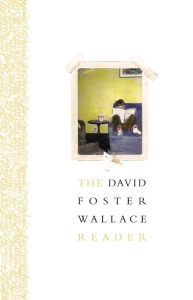
Book Review: The David Foster Wallace Reader

“A writer of virtuosic talents who can seemingly do anything.”

walacereaderThat’s what one critic once said of David Foster Wallace. Its ringing truth is on display in the recent anthology of Wallace’s writing, The David Foster Wallace Reader. The collection contains non-fiction essays, short stories, excerpts from his novels, class notes/syllabi from his time as a professor, and email exchanges with his mom.

It’s an essential addition to the library of any hardcore Wallace fan and a pretty decent introduction to his work for newbies, since it’s a curated and edited “greatest hits” collection. Buy the print edition not the e-book, as it’s the sort of thing you might want to flip through, not read every last word on every one of the 800+ pages.

One of my favorites in the collection, which I hadn’t read before, was “Little Expressionless Animals,” a story originally published in The Girl with Curious Hair. There’s a hilarious sequence about how one character was “reeling into Lesbiansism.”

I had also not read “Incarnations of Burned Children” before. It originally appeared in Esquire in year 2000. It’s three pages long, a single paragraph, and very powerful. A must read.

Some of my favorite excerpts from The Pale King are in here, including his extended riff urging the reader to ignore the disclaimer on the copyright page that what follows is fiction. Many other paragraphs to potentially quote in this post, such as:

The paradox of plagiarism is that it actually requires a lot of care and hard work to pull off successfully, since the original text’s style, substance, and logical sequences have to be modified enough so that the plagiarism isn’t totally, insultingly obvious to the professor who’s grading it.

Or this one, which I tweeted:

Many of the chapters have an afterword written by an academic or commentator. One of Kari Kunzru’s comments after one of the stories gave me pause:

If being expressionless is the result of trauma, as it is in this story, then self-expression must be healthy. But somehow, in the cities of the developed world, expressing yourself has started to feel like work. We’re constantly exhorted toward ever-greater feats of affect, to be that little bit more creative; to commit to our goals; to give service with a smile, feigning excitement like contestants on a game show. When life takes on this game-show quality — fake, regimented, spiritually exhausted — expressivity pulls in two directions, both toward and away from truthfulness. It can be another kind of mask, the kind that eats away at the face until you’re no longer sure what your off-camera reaction would be.