Lots of books.
1. Say Nothing: A True Story of Murder and Memory in Northern Ireland by Patrick Keefe
I was expecting a true crime story, and it is, but it’s much more. It’s a rather in depth exploration of the history of the Troubles in Northern Ireland, where 4,000 people died amidst the violence between the Catholics who wanted to unify Northern Ireland and the Republic of Ireland battling against the Protestants and British allies who sought to remain within the United Kingdom.
It’s a tremendously informative, originally reported, and crisply written deep dive into this period of Ireland’s history. Be prepared for darkness, though. There are no heroes. Here’s one graf I highlighted:
When the torture ended, after a week, some of the men were so broken that they could not remember their own names. Their eyes had a haunted, hollow look to them, which one of the men likened to “two pissholes in the snow.” Another detainee, who had gone into the interrogation with jet-black hair, came out of the experience with hair that was completely white. (He died not long after being released, of a heart attack, at forty-five.) When Francie McGuigan was finally returned to Crumlin Road jail, he saw his father, and the older man broke down and cried.
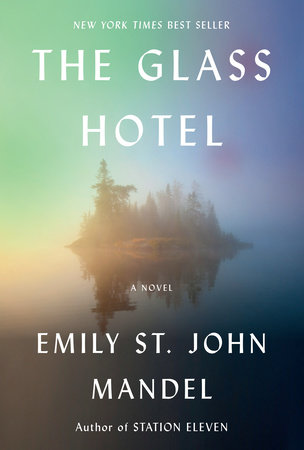
2. The Glass Hotel by Emily St. John Mandel
Super entertaining novel inspired by the Madoff ponzi scheme with fun plot lines involving the shipping and hotel industries. Strong character development, lovely writing, easy to read. A few highlights from Kindle:
In their late thirties they’d decided not to have children, which at the time seemed like a sensible way to avoid unnecessary complications and heartbreak, and this decision had lent their lives a certain ease that he’d always appreciated, a sense of blissful unencumbrance. But an encumbrance might also be thought of as an anchor, and what he’d found himself thinking lately was that he wouldn’t mind being more anchored to this earth.
A steady, low-key, intelligent person, much more interested in listening than in talking about himself. He had that trick—and it was a trick, Leon realized later—of appearing utterly indifferent to what anyone thought of him, and in so doing provoking the opposite anxiety in other people: What does Alkaitis think of me? Later, in the years that he spent replaying this particular evening, Leon remembered a certain desire to impress him.
She had studied the habits of the monied with diligence. She copied their modes of dress and speech, and cultivated an air of carelessness.
“You know what I’ve learned about money? I was trying to figure out why my life felt more or less the same in Singapore as it did in London, and that’s when I realized that money is its own country.”
(A revelation earned only in hindsight: beauty can have a corrosive effect on character. It is possible to coast for some years on no more than a few polished lines and a dazzling smile, and those years are formative.)
3. Uncanny Valley by Anna Weiner
A spot-on take on many of the current social dynamics of San Francisco life during the modern tech boom. Artistically written by a young woman who ends up making money herself as an early employee of a unicorn company. Every phrase intentional, fresh. E.g. “After busing our own table, the engineer suggested we repair to a tiny cocktail bar in the Tenderloin.” (She actually uses “repair” in the same way in another sentence in the book elsewhere — the first and second time that I’d ever seen that verb used in that context.)
“I could not fathom interrogating my relationship with my parents as a form of socializing. I felt uptight, conservative, repressed, corporate by comparison—but I also felt okay with that.”
4. Make it Scream, Make It Burn by Leslie Jamison
Tremendous set of essays across a range of topics. See my previous review of Jamison’s book about addiction. I’m in awe of her writing talents. Highlights below:
It bothered Leonora that people conflated 52’s aloneness with loneliness. It bothered her that people conflated her aloneness with loneliness. Apropos of very little, she told me, “I haven’t been in a relationship since the last century. I haven’t been on a date.” She said it worried other people in her life, friends and family members who tried to set her up. “It’s like a woman is not a whole person until she has a man.” But it didn’t worry her. “I’ve never felt lonely. There is not this lonely factor. I am alone. But I am not lonely, okay? I go over to a friend’s, I buy cases of wine, I have people over, I cook.” It was hard not to hear a hint of doth protest too much in her insistence. But I was also hearing an argument for the importance of humility: Don’t assume the contours of another person’s heart. Don’t assume its desires. Don’t assume that being alone means being lonely.
It seemed much easier to poke holes in things—people, programs, systems of belief—than to construct them, stand behind them, or at least take them seriously. That ready-made dismissiveness banished too much mystery and wonder.
I hated its smugness—how she positions herself as a knowing skeptic in a world full of self-delusion. I started to believe there was an ethical failure embedded in skepticism itself, the same snobbery that lay beneath the impulse to resist clichés in recovery meetings or wholly dismiss people’s overly neat narratives of their own lives.
Their witty asides had become part of a well-worn story. Even its grooves of self-deprecation held the uneasy echoes of lines performed effectively and often.
We say, Wow. We say it again. We stay humble. We can’t know for sure until the body turns up in the river—and even then, it might not be the end. We walk toward the lights. We are safe, or else we aren’t. We live, until we don’t. We return, unless we can’t.
If you learn to pay attention, he says, “it will actually be within your power to experience a crowded, hot, slow, consumer-hell type situation as not only meaningful, but sacred, on fire with the same force that lit the stars.”
Some people call Second Life escapist, and often its residents argue against that. But for me the question isn’t whether Second Life involves escape. The more important point is that the impulse to escape our lives is universal, and hardly worth vilifying. Inhabiting any life always involves reckoning with the urge to abandon it—through daydreaming; through storytelling; through the ecstasies of art and music, hard drugs, adultery, a smartphone screen. These forms of “leaving” aren’t the opposite of authentic presence. They are simply one of its symptoms—the way love contains conflict, intimacy contains distance, and faith contains doubt.
I have spent much of my life as a writer chasing poet C. D. Wright’s suggestion that we try to see people “as they elect to be seen, in their larger selves.”
The more frequently I was told I didn’t seem to be from L.A., the more strongly I wanted to defend it. It was a place other people loved to call shallow or fake, but I found its strip malls and their parking lots oddly gorgeous: sunlight glimmering off gritty streets, palm trees silhouetted against smoggy sunsets.
Marriage wasn’t the bliss of possibility. It was the more complicated satisfaction of actually living and actually having.
Marriage is what happens when the mirage shimmers away to reveal plain asphalt straight ahead. It’s everything you keep trying to summon faith in, and it delivers you to what you couldn’t have imagined: past that first flush of falling in love, to all the other kinds of love that lie ahead. You may never reach Lake Mead, but you’ll always have the drive itself—that particular glow of evening sun baking the highway, setting the cars on fire, light brighter than you can stand to look at, and already holding the night.
there was such a thing as too much honesty. “I find it incredibly difficult to like the narrator of this essay,” he said. I found his phrasing amusing, the narrator of this essay, as if she were a stranger we could gossip about. It was my first nonfiction class, and I wasn’t used to the rules of displacement—all of us pretending we weren’t also critiquing one another’s lives.
5. What You Do is Who You Are by Ben Horowitz
Solid discussion of corporate culture. Highlights:
Jobs explained: “We at Apple had forgotten who we were. One way to remember who you are is to remember who your heroes are.”
VMware’s potential partners would be extremely skeptical of any independent-operating-system company proposing a similar “win-win.” So Greene came up with a shocking rule: Partnerships should be 49/51, with VMware getting the 49. Did she just tell her team to lose? That definitely begs the question “Why?” Greene said, “I had to give our business development people permission to be good to the partners, because one-sided partnerships would not work.” Her rule was actually met not with resistance but with relief
It was of course no easier to measure an exact 49/51 split than a 50/50 “win-win,” but Greene’s employees understood her underlying point: “If you’re negotiating something on the margin, it’s okay to give it to our partner.” VMware went on to create a stunning set of partnerships with Intel, Dell, HP, and IBM that propelled the company to a market capitalization of more than $60 billion.
Stories and sayings define cultures. John Morgridge, the CEO of Cisco from 1988 to 1995, wanted every spare nickel spent on the business. But as many of his employees had come from free-spending cultures, simply reminding them to be frugal didn’t get his point across. Morgridge walked the talk by staying at the Red Roof Inn, but even his example didn’t prove truly contagious. So he came up with a pithy axiom: “If you cannot see your car from your hotel room, then you are paying too much.”
One thing to look for is volunteer work, which helpful people naturally like to do. It also turns out that during the interview, helpful people want to talk much more about the interviewer than about themselves: by learning about her they can anticipate her needs and be, well, helpful.
This one is easy to corroborate with references, and in an interview you can ask, “Tell me about a situation in your last company where something was substandard and you helped to fix it.”
The questions employees everywhere ask themselves all the time are “Will what I do make a difference? Will it matter? Will it move the company forward? Will anybody notice?” A huge part of management’s job is to make sure the answer to all those questions is “Yes!”
The final vital component of the decision-making process is “Do you favor speed or accuracy and by how much?” The answer depends on the nature and size of your business…. consider a business like Andreessen Horowitz, where I work. We make about twenty important investment decisions a year. Getting those right is generally a much higher priority than making them quickly. If you only have twenty shots on goal in a year, you want to make sure each one counts. So we’ll spend hours and hours debating, visiting and revisiting aspects of our decision—then work through the entire process again the next day. Accuracy is much more important to us than speed.
 4.
4. 
