
In his book Balkan Ghosts, a travel log and mini-history of the Balkan countries, Robert Kaplan writes: “The more obscure and unfathomable the hatred, and the smaller the national groups involved, the longer and more complex the story seemed to grow.” It captured perfectly my reaction after reading the book and learning about the histories of Serbia, Croatia, Bulgaria, Bosnia, Albania, Turkey, and various other neighbors. So much fighting over territorial, ethnic, or religious differences that appear to be so inconsequential relative to the bloodshed.
Much of the fighting has to do with perceived historical grievances. Kaplan writes:
Macedonia defines the principal illness of the Balkans: conflicting dreams of lost imperial glory. Each nation demands that its borders revert to where they were at the exact time when its own empire had reached its zenith of ancient medieval expansion.
I read the book because I was visiting Montenegro, Bosnia, and Serbia. I recently got back from the trip. Seeing the places in person, as usual, made me engage with history that I probably ought to have known but hadn’t prioritized knowing till now. Travel makes you do that. It also makes you keep up with a place in the news after you leave. 80% of The Economist used to be uninteresting to me; now, when I flip through and see one of the random articles about, say, Indonesia, I’ll read it, because I’ve been there.
Sarajevo was haunting. It’s a small and pretty city, especially the old town. And quite cheap. But to be in Sarajevo is mainly to see grave yards all around and to visit museums dedicated to a genocide that happened only 20 years ago. Normally, when you think of the horrors of history, you think of grainy black and white photos. The slaughter of Bosnian Muslims (by Orthodox Christian Serbs) happened in the era of color video and color photos. It was so recent that there are people alive right now in Sarajevo who are missing all the men in their extended family.
The Srebrenica massacre museum really emphasized Western negligence during the ordeal. The cowardice/incompetence of the U.N. peacekeepers was a surprisingly recurrent theme. After the U.N. declared Srebrenica a “safe city,” thousands of Muslim men gathered there, thinking they were safe. In fact, they made themselves a convenient target for the Serbian army who overpowered the hapless peacekeep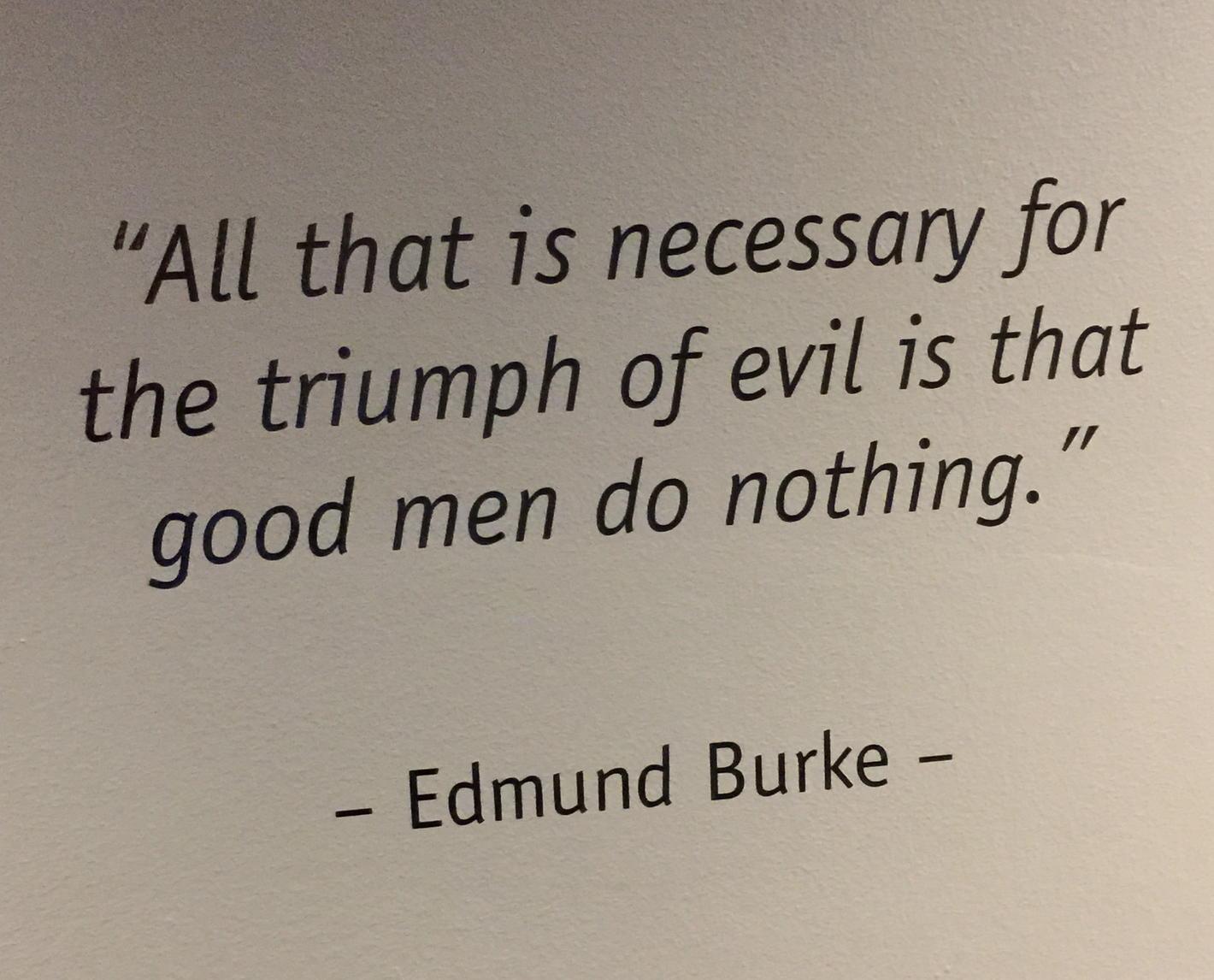 ers and executed 8,000 men and boys in 48 hours. The photo embedded to the right hangs on the wall as you exit the museum. You can’t help but reflect on the costs and benefits of humanitarian interventions.
After Sarajevo, I went to Belgrade. The Belgrade tour guide referred to the 90’s as a “terrible, sad time” where people on all sides made mistakes. He expressed remorse for the 1,000 Serbian civilians killed during the NATO air strikes. No mention of Muslims.
Neither Belgrade nor Sarajevo maintain blockbuster tourist attractions. Sarajevo is prettier; Belgrade maintains a Soviet aesthetic. The Bosnians and Serbians I met were all hospitable and intelligent. In both places I think you visit for a history trip: to learn about Tito and communism, to learn about the Balkan wars, to try to keep up with who hates who for which ethnic or religious reasons, to try to figure out the difference between Catholicism and Orthodoxy.
Here are Tyler Cowen’s impressions of Belgrade. We were there together at a conference. I, too, am very glad I made it to Serbia. And I hope there can be lasting peace in the region.
Full highlights of the Kaplan book below the fold. It’s a good book to read before a visit.

